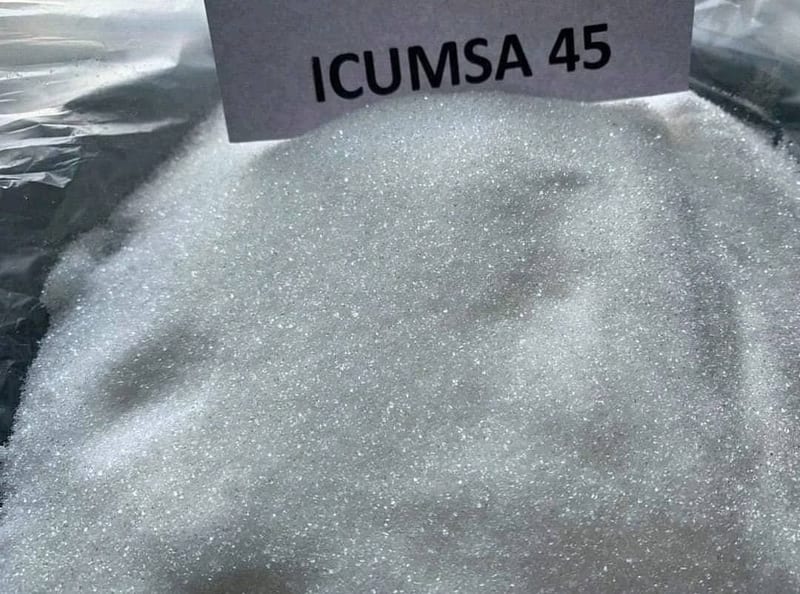
This glossary defines the terms used in the international sugar trade, from grades and specifications (ICUMSA, polarisation, VHP) to shipping, payment and contract vocabulary (FOB, laytime, letter of credit, SAL and RSA rules), plus the broker-chain jargon (SCO, FCO, ICPO) that buyers should recognise as warning signs. Terms are in alphabetical order, and each links to the guide that explains it in full.
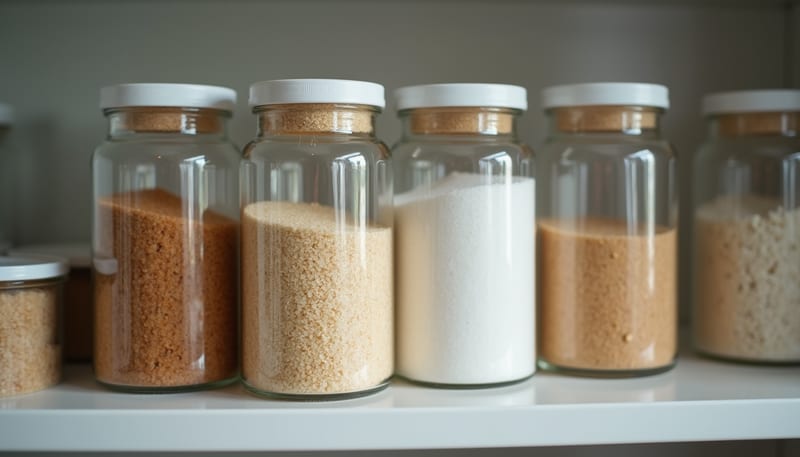
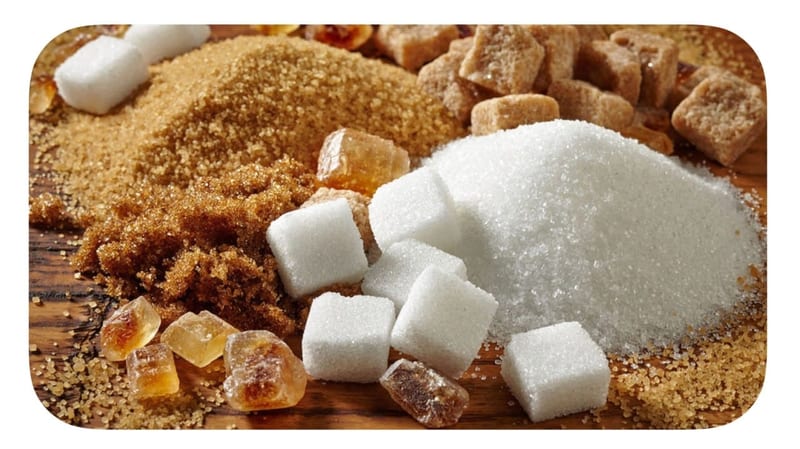
Sugar grades, from refined white to brown, each come with their own trade vocabulary
A
Affination: The first step in refining: washing raw sugar crystals with warm syrup to remove the outer molasses film. See sugar mill vs sugar refinery.
Ash: The mineral content of sugar, measured by conductivity and expressed as a percentage. ICUMSA 45 is specified at 0.04% or less.
B
Bagasse: The fibre left after juice is extracted from sugarcane, burned by mills to make steam and electricity.
Beet sugar: Sugar extracted from sugar beet, grown in temperate countries. Once refined it is chemically the same sucrose as cane sugar. See beet sugar vs cane sugar.
Bill of lading (B/L): The document issued by the carrier as receipt for the cargo, evidence of the contract of carriage and document of title. The buyer needs the original to take delivery.
Brix: A measure of dissolved solids, mainly sugar, in a solution such as cane juice or syrup, expressed in degrees.
Bulk sugar: Sugar shipped loose in a vessel's holds rather than in bags, standard for raw sugar to refineries.
C
Caking: Lumping of sugar caused by moisture absorption and drying. See sugar storage and shelf life.
Centre-South: The main Brazilian cane region (São Paulo, Minas Gerais, Goiás, Paraná, Mato Grosso do Sul), producing about nine-tenths of Brazil's sugar. Harvest runs roughly April to November.
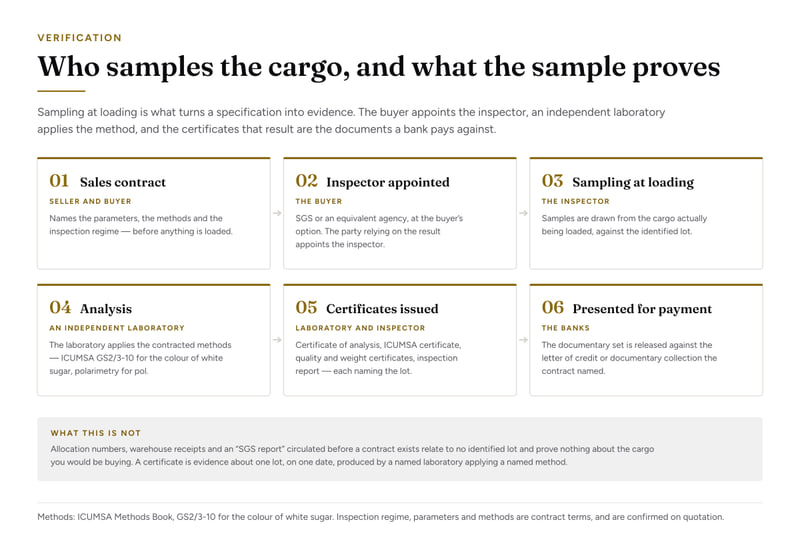
Certificate of analysis (COA): A lot-specific laboratory report stating the measured colour, polarisation, moisture, ash and other parameters. See sugar inspection and certificates.
Certificate of origin: A document certifying the country where the sugar was produced; in Brazil issued by SECEX-accredited entities.
CFR (Cost and Freight): Incoterm under which the seller pays freight to the destination port; risk passes at loading. See Incoterms for sugar.
CIF (Cost, Insurance and Freight): As CFR, plus minimum marine insurance bought by the seller for the buyer.
Confirmed letter of credit: An LC to which a second bank, usually in the seller's country, adds its own undertaking to pay.
Crush: The cane-milling season, or the total quantity of cane milled in it.
D
Demerara: A light brown, large-crystal cane sugar with a mild molasses flavour. See demerara vs muscovado.
Demurrage: A charge paid to the shipowner when a vessel is held at port beyond the agreed laytime. See demurrage and despatch for sugar cargoes.
Dextran: A polysaccharide formed by bacteria in damaged or stale cane; high dextran makes raw sugar harder to refine.
Documentary collection (D/P, CAD): A payment method in which banks release the shipping documents to the buyer only against payment, without a bank promise to pay.
Draft survey: A method of measuring the weight of bulk cargo by reading a ship's draft before and after loading.
F
FCO (Full Corporate Offer): Broker-chain term for a seller's formal offer; genuine trade uses a quotation and a contract. See SCO, FCO and ICPO.
FOB (Free On Board): Incoterm under which the seller delivers the sugar loaded on the buyer's vessel; FOB Santos is the reference basis for Brazilian sugar.
G
GKR / gula rafinasi: Indonesian term for refined sugar made from imported raw sugar for industry. See gula rafinasi.
H
HS 1701: The Harmonized System heading for cane and beet sugar. Raw cane sugar is 1701.14 and refined white sugar 1701.99. See sugar HS codes.
I
ICE Sugar No. 11: The world raw sugar futures contract, priced in US cents per pound, FOB origin. See sugar price today.
ICE London No. 5: The world white (refined) sugar futures contract, priced in US dollars per tonne.
ICPO (Irrevocable Corporate Purchase Order): A broker-chain document with no standing in banking or contract law; a red flag when demanded early.
ICUMSA: International Commission for Uniform Methods of Sugar Analysis; the ICUMSA number of a sugar is its colour in solution. Lower is whiter. See the ICUMSA grade chart.
ICUMSA 45: Refined white sugar with colour of 45 IU or less and at least 99.80% sucrose, the main grade in international white sugar trade. See ICUMSA 45 sugar.
Incoterms: Standard trade terms published by the International Chamber of Commerce that define who pays for and bears the risk of each stage of delivery; current edition Incoterms 2020.
Inspection at loading: Independent sampling, testing and weighing of the cargo as it is loaded, by an agency such as SGS or Intertek.
Invert sugar: A mixture of glucose and fructose formed when sucrose is split, in processing or by microbes in damp raw sugar.
J
Jumbo bag (FIBC): A flexible intermediate bulk container, usually holding about 1 tonne of sugar.
L
Laytime: The time allowed in a charter for loading or discharging a vessel without penalty. See how laytime is calculated.
Letter of credit (LC): A bank's undertaking to pay the seller against presentation of specified documents, usually under ICC UCP 600. See SBLC vs letter of credit.
Line-up: The queue of vessels waiting to load sugar at a port, published weekly by shipping agents. See Santos and Paranaguá.
M
Massecuite: The mixture of sugar crystals and syrup produced in vacuum pans before centrifugation.
Mill white sugar: White sugar made directly at a cane mill, often by sulphitation, typically around ICUMSA 100–150. Also called plantation white.
Molasses: The dark syrup left after sugar crystals are separated; used for animal feed, fermentation and ethanol.
Moisture: The water content of sugar as a percentage; ICUMSA 45 is specified at 0.04% or less.
MT700: The SWIFT message banks use to issue a documentary letter of credit.
MT760: The SWIFT message commonly used for guarantees and standby letters of credit.
O
Organic sugar: Sugar produced and processed under a certified organic system with a certified chain of custody. See organic cane sugar.
P
Phytosanitary certificate: An official certificate that a plant-product consignment meets the importing country's plant-health rules; in Brazil issued by MAPA.
Polarisation (pol): The sucrose content of sugar measured by polarimeter, in degrees (°Z). VHP raw sugar is 99.3° or higher.
Proof of product (POP): Broker-chain term for documents claimed to prove a seller has sugar; often forged or sold for a fee.
R
Raw sugar: Cane sugar crystallised at the mill but not refined, still carrying a film of molasses. See raw sugar vs refined white sugar.
RBU: Reference Basis Unit: a measure used in the EU system to assess the colour type of white sugar, rarely used in Brazilian export contracts.
Refined sugar: Sugar that has been purified from raw sugar by melting, clarification, decolourisation and recrystallisation, usually ICUMSA 45 or lower.
RSA rules: Contract rules of the Refined Sugar Association, London, widely used for white sugar contracts and arbitration.
S
SAL rules: Contract rules of the Sugar Association of London, widely used for raw sugar contracts and arbitration.
SBLC (standby letter of credit): A bank's undertaking to pay if its client defaults; a backup, not a payment method for a first purchase.
SCO (Soft Corporate Offer): Broker-chain term for an informal sugar offer; typical of unverified offers.
Sugar mix: The share of a Brazilian mill's cane juice sent to sugar rather than ethanol in a given period. See usina model.
Sulphitation: Treatment of cane juice with sulphur dioxide to lighten colour when making mill white sugar.
U
Usina: Portuguese for an industrial sugarcane mill; most Brazilian usinas make sugar and ethanol.
V
VHP sugar: Very High Polarisation raw cane sugar, Brazil's standard export raw sugar, pol 99.3° or higher. See VHP sugar explained.
VVHP sugar: Very Very High Polarisation raw sugar, slightly purer and lower in colour than VHP.
W
White premium: The spread between white sugar (London No. 5) and raw sugar (No. 11) prices, roughly a refiner's margin.
Using these terms in a contract
Most disputes in sugar trade come from terms that were not defined. When you write a contract, state the grade by its numbers (colour in ICUMSA units, polarisation, moisture, ash), name the Incoterm with its edition and port, name the inspection agency, and set out the payment instrument and its documents. Our guide to how to buy sugar from Brazil and the sugar export FAQ show how these terms fit together, and you can ask us for a specification and quotation.
Frequently asked questions
What does ICUMSA mean in sugar? The International Commission for Uniform Methods of Sugar Analysis. The ICUMSA number is the sugar's colour in solution; lower numbers are whiter.
What does VHP mean in sugar? Very High Polarisation, the standard grade of raw cane sugar exported from Brazil, with polarisation of 99.3° or higher.
What is pol in sugar? Polarisation: the sucrose content of sugar measured with a polarimeter, expressed in degrees.
What is the white premium? The price difference between refined white sugar futures and raw sugar futures, roughly the margin available to refiners.
What are SCO, FCO and ICPO? Broker-chain documents (soft corporate offer, full corporate offer, irrevocable corporate purchase order) with no standing in real sugar contracts; frequent in scam offers.
What is demurrage? A charge paid to a shipowner when a vessel stays in port longer than the agreed laytime for loading or discharge.