An SBLC (standby letter of credit) is a bank's promise to pay if its client fails to pay or perform; it is a safety net that is only drawn when something goes wrong. A documentary letter of credit (LC) is the normal way to pay for a sugar shipment: the buyer's bank pays the seller when the seller presents the shipping documents the LC requires. For buying sugar, the LC is the payment; an SBLC is, at most, a guarantee in the background. This guide explains both instruments, how a sugar LC works step by step, and why demands for an SBLC "up front" are one of the most common signs of a fake sugar offer.
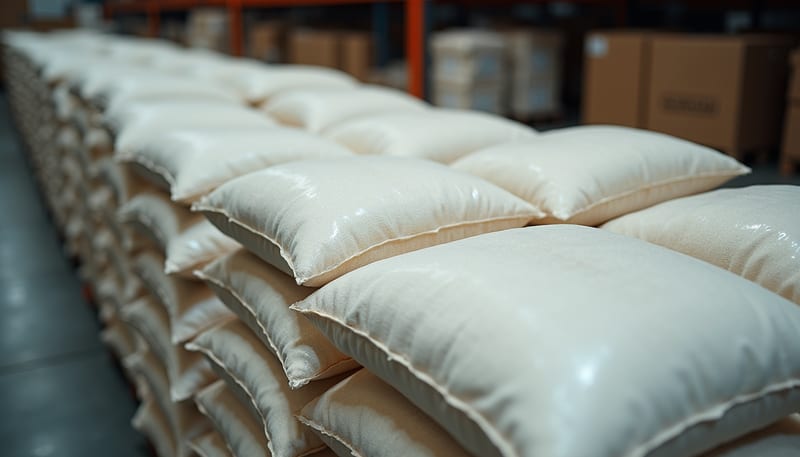
Under a documentary LC, the bank pays against documents that prove these bags were inspected and loaded
SBLC vs letter of credit at a glance
| Documentary letter of credit (LC) | Standby letter of credit (SBLC) | |
|---|---|---|
| Purpose | Pays for the goods | Backs up a payment or performance obligation |
| When it pays | When compliant shipping documents are presented | Only if the applicant defaults and the beneficiary claims |
| Expected to be drawn? | Yes, that is the point | No; if all goes well it expires unused |
| Usual rules | ICC UCP 600 | ICC ISP98 (or UCP 600) |
| Documents to draw | Invoice, bill of lading, certificates of analysis, origin, weight, etc. | A demand stating the applicant has defaulted, plus any documents it lists |
| Typical SWIFT message | MT700 | Often MT760 |
| Use in a sugar sale | Standard for first and spot shipments | Occasionally used to secure open-account or long-term contracts between established parties |
What is a letter of credit?
A letter of credit is an undertaking by a bank (the issuing bank, normally the buyer's bank) to pay the seller (the beneficiary) a stated amount, provided the seller presents the documents listed in the credit, on time and without discrepancies. Under the International Chamber of Commerce's UCP 600 rules, which nearly all LCs follow, a credit is irrevocable unless it says otherwise: once issued, the buyer cannot cancel it on its own.
Two features make an LC suit commodity trade:
- Banks deal in documents, not goods. The bank checks the papers against the credit; it does not inspect sugar. That is why the documents, especially the inspection certificates, must describe exactly what the contract requires.
- Each side's risk is covered by a bank. The seller knows a bank will pay if the documents comply. The buyer knows the bank pays only against proof of shipment and inspection.
Confirmed LCs
If the seller doubts the issuing bank or the buyer's country, it can ask a bank it trusts, often in its own country, to confirm the credit. The confirming bank then adds its own promise to pay. Confirmation costs a fee and is common for first shipments into higher-risk markets.
Sight and usance
A sight LC pays when compliant documents are presented. A usance (deferred-payment) LC pays a set number of days later, which gives the buyer credit time. Usance terms are agreed in the contract and priced accordingly.
How a sugar purchase works with an LC, step by step
- Quotation and contract. Grade, specification, quantity, packaging, Incoterm, port, shipment period and payment terms are agreed in a signed contract. See how to buy sugar from Brazil.
- The buyer applies for the LC at its bank, with wording matching the contract.
- The issuing bank sends the LC to the seller's bank (the advising bank) over SWIFT, usually as an MT700.
- The seller checks the LC. Any term the seller cannot meet, such as an impossible shipment date or a document no one issues, must be amended before shipment.
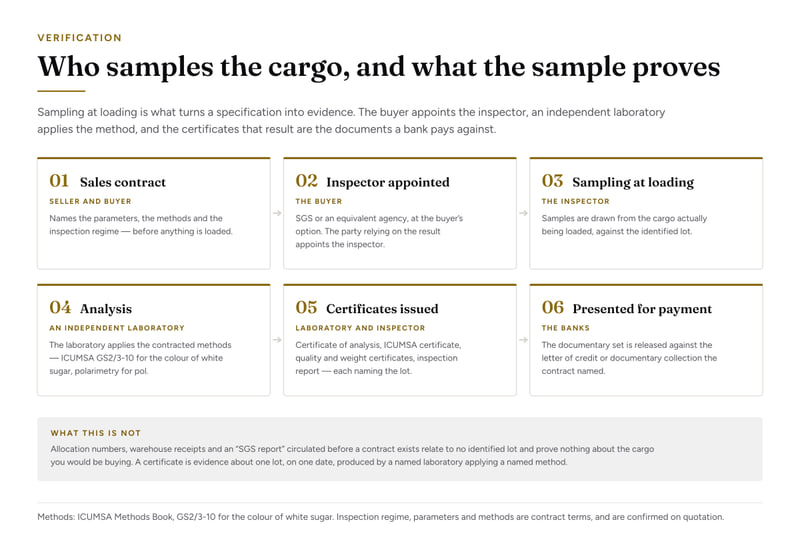
- The sugar is produced, packed, inspected and loaded. The independent inspector issues its certificates at loading. See sugar inspection and certificates.
- The seller presents documents to its bank: commercial invoice, bill of lading, certificate of analysis, weight and quality certificates, certificate of origin, packing list, phytosanitary certificate and insurance certificate if CIF.
- The banks examine the documents. If they comply, the issuing (or confirming) bank pays.
- The buyer receives the documents through the banks and uses the bill of lading to take delivery at the port.
Most problems come from discrepancies: a misspelled port, a date outside the credit, or an inspection certificate that uses different wording from the LC. Draft the LC from the contract and have both sides review the draft before issue.
What is an SBLC?
A standby letter of credit is a bank undertaking to pay the beneficiary if the applicant fails to do something it promised: usually to pay an invoice, sometimes to perform a contract. It sits in the background like a bank guarantee. Standbys are normally issued under the ICC's ISP98 rules.
In legitimate sugar trade, an SBLC can make sense when:
- a long-standing buyer moves from LC to open-account payment, and the seller wants a bank's backing in case an invoice goes unpaid;
- a performance guarantee is needed in a long-term supply contract, from either side.
In both cases the SBLC is issued between parties who already have a contract and a trading history. It is not a way to pay for a first shipment.
Why "SBLC first" sugar offers are a red flag
A large share of online sugar offers ask the buyer to issue an SBLC, an "MT760", a "bank comfort letter" or a "pre-advice MT799" before the seller provides anything verifiable. Common patterns:
- "Buyer issues MT760 SBLC, seller ships, buyer pays by MT103." The SBLC adds nothing for a real seller, but a fraudster can try to monetise or discount it.
- Upfront fees to "activate" or "verify" an SBLC, register a contract or pay for "proof of product".
- Huge monthly volumes for 12 months of ICUMSA 45 at a price below the world market.
- Pressure to issue instruments before any inspection, sample or company verification.
A genuine sugar exporter wants one thing from a first-time buyer: a workable documentary LC, or another bank-mediated payment, that pays against shipping documents. It never needs a fee to be paid to a personal account. The broker-chain vocabulary of SCO, FCO, ICPO and "proof of product" is unpacked in soft corporate offers, FCO and ICPO.
Other payment terms in sugar trade
| Method | How it works | When it fits |
|---|---|---|
| Documentary LC | Bank pays against compliant documents | First shipments, new relationships |
| Documentary collection (CAD / D/P) | Banks release documents only when the buyer pays; no bank promise to pay | Known counterparties, lower bank cost |
| Telegraphic transfer (TT) | Direct bank transfer, in advance or after documents | Established relationships only |
| Open account with SBLC | Seller ships and invoices; SBLC covers default | Long-term buyers with good credit |
Our own terms are agreed in the contract, by documentary LC or documentary collection through the banks. For a first shipment we recommend a documentary LC. See the payment answers in our FAQ.
Practical tips for buyers opening a sugar LC
- Copy the specification exactly from the contract, including the ICUMSA limit and the inspection company.
- Name realistic documents. Ask only for certificates that exist and that the named bodies issue.
- Allow enough time. Give a latest shipment date and an expiry that cover the shipment window and document presentation.
- Match the Incoterm. An FOB credit should not ask for an insurance certificate; a CIF credit should. See Incoterms for sugar.
- Let the seller see a draft before issue to avoid costly amendments.
Frequently asked questions
What does SBLC mean? Standby letter of credit: a bank's undertaking to pay the beneficiary if its client fails to pay or perform as agreed.
What is the difference between an SBLC and an LC? A documentary LC is the payment itself and is expected to be drawn against shipping documents. An SBLC is a backup that is drawn only if the applicant defaults.
Is a letter of credit irrevocable? Under UCP 600 a credit is irrevocable even if it does not say so, which means the buyer cannot cancel or amend it without the seller's agreement.
Do I need an SBLC to buy sugar from Brazil? No. For a first purchase, a documentary letter of credit is the normal instrument. Be cautious of anyone who insists on an SBLC or an upfront fee before verifiable steps.
Who pays the LC bank charges? Usually each party pays its own bank's charges; who pays any confirmation fee is agreed in the contract, and it is often for the seller's account because the seller asked for it.
What is an MT700? The SWIFT message format banks use to issue a documentary letter of credit.