
Raw Brown Cane Sugar, Grade E, ICUMSA 600-1200
Specification last reviewed 19 October 2026.
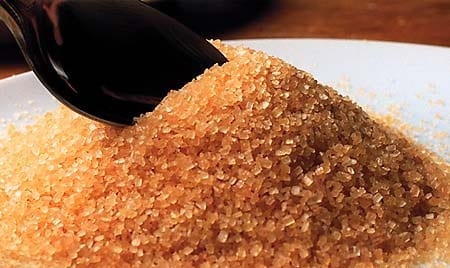
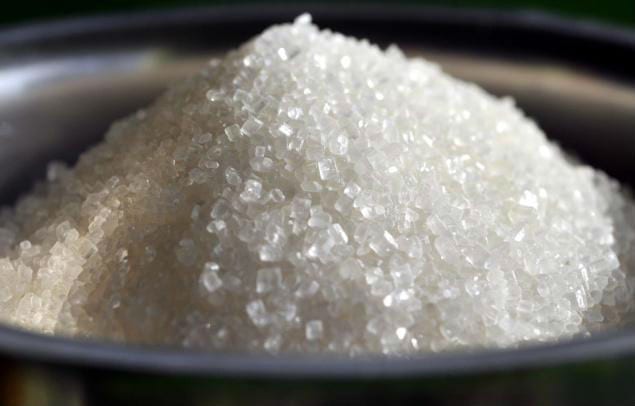
Raw brown cane sugar at ICUMSA 600-1200 is an unrefined cane sugar that keeps part of its natural molasses layer. That molasses is what gives the crystals their brown to golden-brown colour, and it is also what puts the grade at the high end of the ICUMSA scale: ICUMSA measures colour, so a higher number means a darker, less refined sugar.
Because the final refining stage is left to the buyer, raw grades like this one carry a lower cost per tonne than refined white sugars. It is bought in bulk as refinery feedstock, as an input for fermentation and distillation including ethanol production, and as an industrial ingredient in applications where colour is not a constraint.
We export ICUMSA 600-1200 from Brazil in wholesale quantities, in 20ft and 40ft containers.
What is VHP sugar?
VHP stands for Very High Polarisation, and it is the name the trade uses for the Brazilian raw cane sugar that moves in international bulk trade — including this grade. The name says what the grade is sold on: its polarisation, the sucrose content measured by polarimeter, rather than its colour.
That distinction matters, because polarisation and colour are independent parameters. VHP sugar is high in sucrose and dark, which sounds contradictory only if you assume the ICUMSA figure is a purity score. It is not: it is a colour reading. A VHP lot is bought by a refinery precisely because the sucrose is already there and the colour is the refinery's own job to remove.
In Brazilian practice VHP is quoted across roughly the ICUMSA 600 to 1500 range, and it is also called simply raw sugar. Two consequences for a buyer:
-
The grade name is not a value. "VHP" tells you the class, not the number. The polarisation of a particular lot is on that lot's certificate of analysis, and the contract should reference the figure, not the name.
-
If you work to a minimum pol, state it. Raw sugar contracts routinely price with a premium or discount per degree of polarisation above or below the contract basis, so the figure you specify is a commercial term and not only a technical one.
Raw brown cane sugar specification
Raw sugar varies within its colour band by cane, mill and season, which is why the figures that matter on this grade are lot figures rather than grade figures. The certificate of analysis is the operative document, and on a raw cargo it is worth reading before the price rather than after.
Analytical specification
| Parameter | Specification | Unit and method |
|---|---|---|
| Colour | 600–1200 RBU | Reference Base Units, by reflectance — raw sugar is too dark for routine solution-colour measurement |
| Polarisation (pol) | Stated on the certificate of analysis | Degrees or per cent, by polarimetry |
| Moisture | Stated on the certificate of analysis | Per cent by mass, by loss on drying |
| Ash | Stated on the certificate of analysis | Conductivity ash, per cent by mass to three decimal places |
| Reducing sugars (invert) | Stated on the certificate of analysis | Per cent by mass |
| Dextran | Stated on the certificate of analysis | mg/kg — asked for by refineries, because dextran affects filtration and crystallisation |
| Sulphur dioxide (SO₂) | Stated on the certificate of analysis | mg/kg |
| Granulation (grain size) | Stated on the certificate of analysis | Sieve analysis; mean aperture in mm |
| Magnetic particles | Stated on the certificate of analysis | mg/kg |
| Heavy metals — lead, arsenic, copper | Stated on the certificate of analysis | mg/kg per element |
| Pesticide residues | Stated on the certificate of analysis | Residue screen against the limits in force in the destination market |
| Microbiology — total plate count, yeasts, moulds | Stated on the certificate of analysis | Colony-forming units per gram |
| Appearance | Brown to golden brown, coarser and damper crystal than refined white | Visual |
Commercial specification
| Parameter | Specification |
|---|---|
| Product | Raw brown cane sugar, grade E; VHP raw sugar |
| Type | Raw, unrefined cane sugar |
| Raw material | Sugar cane |
| Origin | Brazil — São Paulo, Minas Gerais and Goiás |
| Suitable for | Refining; fermentation and distillation, including ethanol; industrial use where colour is not a constraint |
| Packaging and net weights | 1,000 kg (1 MT) jumbo bags, 50 kg bags, or bulk and breakbulk; the format for your order is confirmed on quotation |
| Container loading | 20ft and 40ft containers |
| Shelf life | Stated on the certificate of analysis |
| Storage conditions | Dry, covered storage. Raw sugar carries more moisture than refined white and will consolidate in store, which matters to whoever has to discharge it |
| HS heading | 1701.13 and 1701.14 — raw cane sugar without added flavouring or colouring, within Harmonised System heading 1701; the operative code is your national tariff line, see sugar grades and the HS code |
| Documentation | Certificate of purity and ICUMSA certificate; certificate of analysis on request |
Terms of supply at a glance
Raw sugar is the bulk end of the business, and the terms differ from the refined grades in two ways worth stating: the lots are larger, and the packaging is more often jumbo bags or bulk than 50 kg bags.
| Term | Grade E, ICUMSA 600-1200 |
|---|---|
| Minimum order quantity | Confirmed on quotation. Raw grades are bought in larger lots than refined — state your tonnage and whether you want containers, bulk or breakbulk |
| Incoterms offered | FOB, CFR and CIF (Incoterms 2020) |
| Port of loading | Santos, São Paulo, or Paranaguá, Paraná; confirmed on quotation |
| Lead time | Confirmed on quotation; it moves with the crop cycle more sharply on raw than on refined grades |
| Payment terms | Documentary letter of credit, or documentary collection; confirmed on quotation |
| Packaging | 1,000 kg jumbo bags, 50 kg bags, or bulk and breakbulk |
| Inspection | SGS or an equivalent independent agency, at the buyer's option. On raw cargoes most refinery buyers contract for inspection and for pol and moisture determination at loading |
| Certifications held | Confirmed on quotation and supplied with the specification pack |
Raw cane sugar vs white sugar: what actually differs
Raw and white sugar are the same molecule. Both are sucrose, both can come off the same cane in the same mill, and the sweetness per gram is for practical purposes identical. What separates them is one processing stage, not one plant.
In the mill, cane juice is boiled until the sugar crystallises and the crystals are spun to throw off the surrounding syrup. Stop there and you have raw sugar: each crystal still wearing a thin film of molasses. Send it on to a refinery and that film is washed off, the remaining non-sugar material and colour are filtered out, and the result is white.
| Raw ICUMSA 600–1200 | Refined white sugar | |
|---|---|---|
| ICUMSA colour | 600–1200 RBU | 35–150 |
| Molasses film | Retained | Washed off |
| Colour | Brown to golden brown | White |
| Processing | Mill only | Mill plus refinery |
| Crystal | Coarser, damper | Finer, drier, free-flowing |
| Food use | Where colour and flavour are acceptable | Unrestricted |
| Typical buyer | Refineries, distilleries, industry | Food, drink, retail |
| HS heading | 1701.13 and 1701.14 | 1701.99 |
| Cost per tonne | Lower | Higher |
For a buyer the trade is straightforward. Raw sugar is cheaper because you are taking on the refining, either in your own plant or by living with the colour. White sugar costs more because the work is already done. There is no quality judgement in either direction — a refinery buying raw sugar is not buying a lesser product, it is buying the feedstock it was always going to buy.
Where it stops being interchangeable is in the finished article. The residual molasses carries colour and a distinct flavour note into whatever you make, and the coarser, damper crystal dissolves more slowly and meters differently. For a clear drink or a pale icing you want a refined grade; for a dark sauce, a rum wash or a fermentation vessel, the molasses is either irrelevant or the point.
Who buys ICUMSA 600-1200, and why
This grade has four buyer types, and none of them is a retail or food-ingredient buyer. That is the single most useful thing to know about it, because it tells you what the specification conversation will be about.
-
Cane refineries. They buy on polarisation and on how the sugar will behave in their own process — colour is theirs to remove, so what they screen on is pol, moisture, ash and dextran, plus consistency across a contract. Refinery buyers almost always want inspection at loading.
-
Distilleries and fermentation plants, including ethanol producers. Here only the fermentable sugar content counts. Colour is irrelevant, reducing sugars and microbiological load are not, and a lower cost per tonne of fermentable sugar is the entire purchase rationale.
-
Industrial users in applications with no colour constraint — caramel colour production, syrup manufacture, and chemical and fermentation-based processes.
-
Food manufacturers making products that are already dark or that want the molasses flavour: dark sauces, treacle-style products, some bakery and some spirits.
If you are not one of those four, a refined grade is almost certainly cheaper for you once the cost of dealing with colour is counted. Say what you are making in the enquiry and we will say so plainly.
How grade E compares with the refined grades
ICUMSA runs from the whitest grades to the darkest, so this product sits at the opposite end of our range from the refined ones:
-
ICUMSA 45 sugar — the standard refined export grade, 99.8% sucrose, 45 ICUMSA colour maximum
-
Refined ICUMSA 35 sugar — refined sugar with a drier, clearer grain
-
Refined white sugar crystals — over 99.7% sucrose, no molasses, no external impurities
-
ICUMSA 100 cane sugar — 99.50% minimum polarisation, nearly white, lower cost
-
Beverage-grade refined sugar — refined to the parameter set drinks production works to
If you are refining in-house, this grade is your input and those are your competitors' outputs. For how the whole scale fits together, and for what VHP means alongside the ICUMSA bands, see what the ICUMSA number measures.
Packaging, containers and documentation
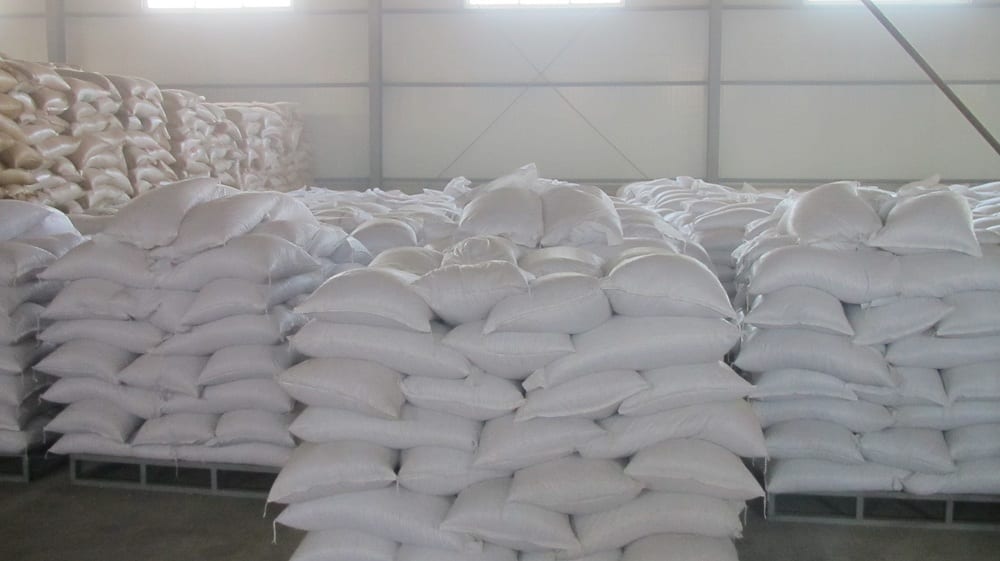
Orders load in 20ft and 40ft containers, in 1,000 kg jumbo bags, 50 kg bags, or bulk and breakbulk, with the format confirmed on quotation to suit your discharge arrangements. On a refinery cargo the discharge equipment usually decides the packaging, not the other way round, so tell us what you can handle.
The documentary set for a cargo:
-
Certificate of purity and ICUMSA certificate, with the certificate of analysis for the lot on request — worth asking for before you commit, since raw sugar varies within its colour band
-
Certificate of origin, issued through an accredited Brazilian certifier, which is what determines the tariff where your market applies a preferential rate
-
Quality and weight certificates, and an independent inspection report from SGS or an equivalent agency; on raw cargoes this normally includes pol and moisture at loading
-
Phytosanitary certificate where the destination requires it, with the fumigation certificate where that is a condition of entry
-
Commercial invoice, packing list and bill of lading
How raw sugar is priced
Raw sugar is the contract the world prices off: ICE No. 11. A physical quotation for a raw cargo is that benchmark plus or minus a differential for origin and mill, polarisation, lot size, packaging, the Incoterm and the shipment window — and on raw grades the polarisation adjustment is explicit, priced per degree above or below the contract basis.
There is no list price we could publish here that would still be true next week, and quoting one would only mean re-quoting later. The mechanism, including how the refined grades take their premium over this benchmark, is set out in how ICUMSA 45 sugar is priced per tonne.
Tell us the volume, the destination, the Incoterm and your minimum pol, and we will price against the market on the day of your enquiry, firm for a stated validity.
Frequently asked questions
What is VHP sugar? Very High Polarisation raw cane sugar — the Brazilian raw export grade, sold on its polarisation rather than its colour. It is unrefined, retains part of its natural molasses and is therefore dark, quoted in Brazilian practice across the ICUMSA 600 to 1500 range. The polarisation of a given lot is on that lot's certificate of analysis.
Is VHP sugar the same as ICUMSA 600-1200? They overlap. VHP is the commercial class; ICUMSA 600-1200 is a colour band within it, and grade E is the designation we export. If a contract says only "VHP", it has not yet specified a colour band or a polarisation.
Is raw cane sugar the same as brown sugar? No. Most brown sugar sold at retail is refined white sugar with molasses added back in a controlled quantity, which is why it is identical from bag to bag. Raw sugar such as ICUMSA 600-1200 has never had its own molasses removed, so its colour and flavour vary within the grade band.
Can I use raw cane sugar instead of white sugar? By weight the sucrose substitutes directly. In practice it is not a straight swap: the crystals are coarser and damper, they dissolve more slowly, and they carry colour and a molasses note into the finished product. Fine for anything already dark; not for anything clear or pale.
Is raw sugar better for you than refined sugar? The molasses film carries trace non-sucrose material, but in quantities far too small to matter against the amount of sugar you would have to eat to obtain them. Choose raw grades for colour, flavour and cost per tonne, not for nutrition.
Why is ICUMSA 600-1200 given as a range? Because ICUMSA is a colour measurement, and the colour of raw sugar depends on the cane, the mill and the season. A given lot lands somewhere inside the band rather than on a fixed number. If your process has a ceiling on colour, tell us what it is and we will quote against it rather than against the band.
Can you supply it for ethanol production? Yes. Raw sugar at this grade is routinely bought as a fermentation feedstock by distilleries, including ethanol producers, where colour is irrelevant and the fermentable sugar content is the only specification that counts.
What is the polarisation of this grade? It is certified per lot on the certificate of analysis rather than published as a headline figure, because raw sugar varies within its band. If you are refining or fermenting to a minimum polarisation, state it in your enquiry and we will quote against it — on raw cargoes the pol figure is priced, not just recorded.
What is the HS code for raw cane sugar? Subheadings 1701.13 and 1701.14, within Harmonised System heading 1701, for raw cane sugar without added flavouring or colouring. Refined grades fall under 1701.99 instead. Beyond six digits the operative line is your own national tariff code.
In what packaging does it ship? 1,000 kg jumbo bags, 50 kg bags, or bulk and breakbulk, in 20ft and 40ft containers. Refinery buyers usually take jumbo bags or bulk.
Request a quotation
To quote, we need the grade, the volume, the destination port and the Incoterm. Send those four and we will price the order against the market, confirm packaging and prepare the documentation.
If you are refining in-house and working to a colour ceiling or a minimum polarisation, include both in the enquiry and we will tell you straight away whether this grade clears them. Send it through the enquiry form below, or contact us.
Other sugar grades we supply
Contact us
Fields marked with an asterisk are required.