
ICUMSA 100 Sugar from Brazil
Specification last reviewed 19 October 2026.
What is ICUMSA 100 sugar?
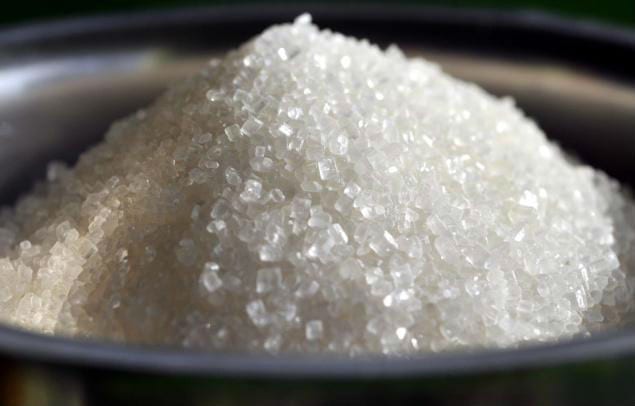
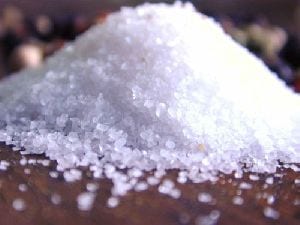
ICUMSA 100 is high-polarisation cane sugar with a colour of no more than 100 ICUMSA units. It is near-white rather than snow white, with free-flowing crystals, and it is refined enough for direct human consumption.
ICUMSA stands for the International Commission for Uniform Methods of Sugar Analysis. The number expresses the colour of the sugar in solution, which the trade uses as its working measure of refinement: a lower figure means a whiter, more processed sugar. At 100, this grade sits one step up the scale from refined white ICUMSA 45 — less processed, and priced accordingly.
That is the whole commercial case for the grade. It is bought by volume users who need clean, consumable sugar but whose finished product does not depend on the last increment of whiteness, and who would rather not pay for refining they cannot see in the end result.
We export ICUMSA 100 from Brazil in wholesale quantities, sourced from mills in São Paulo, Minas Gerais and Goiás.
ICUMSA 100 sugar specifications
This is the grade on which the most figures are published, because its three purity ceilings are part of the grade designation rather than lot-specific marketing: 99.50% polarisation minimum, 0.15% ash maximum, 0.10% moisture maximum.
Analytical specification
| Parameter | Specification | Unit and method |
|---|---|---|
| Colour | 100 ICUMSA units maximum | Solution colour in ICUMSA units, by ICUMSA method GS2/3-10 |
| Polarisation (pol) | 99.50% minimum | Degrees or per cent, by polarimetry |
| Ash | 0.15% maximum | Conductivity ash, per cent by mass to three decimal places |
| Moisture | 0.10% maximum | Per cent by mass, by loss on drying |
| Reducing sugars (invert) | Stated on the certificate of analysis | Per cent by mass |
| Sulphur dioxide (SO₂) | Stated on the certificate of analysis | mg/kg |
| Granulation (grain size) | Stated on the certificate of analysis | Sieve analysis; mean aperture in mm |
| Magnetic particles | Stated on the certificate of analysis | mg/kg |
| Heavy metals — lead, arsenic, copper | Stated on the certificate of analysis | mg/kg per element |
| Pesticide residues | Stated on the certificate of analysis | Residue screen against the limits in force in the destination market |
| Microbiology — total plate count, yeasts, moulds | Stated on the certificate of analysis | Colony-forming units per gram |
| Appearance | Near-white, free-flowing crystals | Visual |
Commercial specification
| Parameter | Specification |
|---|---|
| Grade designation | Cane sugar, ICUMSA 100 |
| Form | Granulated, crystalline |
| Raw material | Sugar cane |
| Origin | Brazil — São Paulo, Minas Gerais, Goiás |
| Suitable for | Direct human consumption; food and beverage manufacturing; baking; catering |
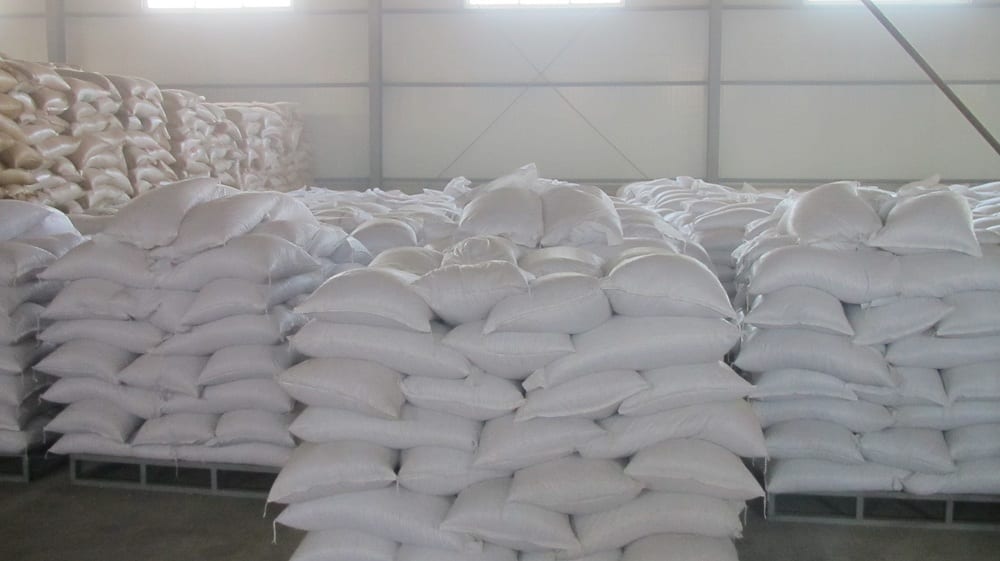
| Packaging and net weights | 50 kg bags, 1,000 kg (1 MT) jumbo bags, or bulk; the format for your order is confirmed on quotation |
| Container loading | 20ft and 40ft containers |
| Shelf life | Stated on the certificate of analysis |
| Storage conditions | Dry, covered storage away from strong-smelling cargo. At a 0.10% moisture maximum this grade flows well, but it will cake if it takes up water in store |
| HS heading | 1701.99 — refined sugar other than raw, within Harmonised System heading 1701; the operative code is your national tariff line, see sugar grades and the HS code |
| Documentation | Certificate of purity, ICUMSA certificate and certificate of analysis |
Note that polarisation and sucrose content are not the same measurement, and contracts should not treat them as interchangeable. Polarisation is an optical reading of the sugar's rotation of polarised light, used throughout the trade as the standard purity figure for cane sugar. ICUMSA 100 is specified at 99.50% polarisation minimum.
Terms of supply at a glance
ICUMSA 100 is a volume grade, and the terms below reflect that: it is usually bought in larger lots than the refined whites, because the reason to buy it at all is cost per tonne.
| Term | ICUMSA 100 |
|---|---|
| Minimum order quantity | Confirmed on quotation — state your tonnage and we will confirm the smallest lot that loads economically to your destination |
| Incoterms offered | FOB, CFR and CIF (Incoterms 2020) |
| Port of loading | Santos, São Paulo, or Paranaguá, Paraná; confirmed on quotation |
| Lead time | Confirmed on quotation; it moves with the shipment window and the point in the Brazilian crop cycle |
| Payment terms | Documentary letter of credit, or documentary collection; confirmed on quotation |
| Packaging | 50 kg bags, 1,000 kg jumbo bags or bulk. For catering and repacking volumes the 50 kg bag is the usual unit; for food manufacturing the jumbo bag loads and discharges faster |
| Inspection | SGS or an equivalent independent agency, at the buyer's option, on request |
| Certifications held | Confirmed on quotation and supplied with the specification pack |
The documentary set is the one issued for every grade: certificate of purity, ICUMSA certificate, certificate of analysis, certificate of origin through an accredited Brazilian certifier, quality and weight certificates, and a phytosanitary certificate where the destination requires one. Independent inspection is worth contracting on this grade specifically because its value sits in a colour ceiling that a buyer cannot verify by eye.
ICUMSA 100 and ICUMSA 150: where the grade sits
In the Brazilian trade, ICUMSA 100 and ICUMSA 150 are often handled together. The designation Brazil ICUMSA 150 covers the band from ICUMSA 100 to ICUMSA 150, and sugar in that band is commonly sold as crystal sugar. If you have been quoted "ICUMSA 150" by one supplier and "ICUMSA 100" by another, you may be looking at the same commercial category described at different points in its range.
This matters when you contract. ICUMSA 150 is a ceiling, not a target: material delivered against it can legitimately be darker than material delivered against ICUMSA 100. Where colour consistency between shipments matters to you, specify the figure you need rather than the band.
| Grade | ICUMSA colour | Description |
|---|---|---|
| ICUMSA 35 | 35 maximum | The most refined grade we export |
| ICUMSA 45 | 45 maximum | Refined white, "London White" |
| ICUMSA 100 | 100 maximum | High-polarisation near-white cane sugar |
| Refined white sugar crystals | 100–150 | Crystal sugar |
| VHP raw cane sugar | 600–1200 | Raw, unrefined, retains part of the molasses layer |
For the full scale and the measurement methods behind these bands, see what the ICUMSA number measures.
ICUMSA 100 against ICUMSA 45: which grade to specify
The honest comparison, parameter by parameter:
| ICUMSA 100 | ICUMSA 45 | |
|---|---|---|
| Colour | 100 ICUMSA maximum, near-white | 45 ICUMSA maximum, snow white |
| Purity figure | 99.50% polarisation minimum | 99.8% sucrose; polarisation certified per lot |
| Ash | 0.15% maximum | Certified per lot |
| Moisture | 0.10% maximum | 0.04% typical |
| Degree of processing | Less refined | Fully refined |
| Cost per tonne | Lower | Higher |
Specify ICUMSA 100 when the finished product is opaque, coloured, baked or fermented, when the sugar is served rather than dissolved into a clear solution, or when the application is cost-sensitive at volume and a near-white crystal is acceptable.
Specify ICUMSA 45 when residual colour would show in the finished product — clear beverages, clear syrups, white icings, pharmaceutical preparations — or when a customer specification names the grade.
Going the other way: if colour genuinely does not matter because you intend to refine the sugar yourself or ferment it, VHP raw cane sugar at ICUMSA 600–1200 is cheaper again per tonne and is bought as refinery feedstock for exactly that reason.
What ICUMSA 100 sugar is used for
-
Food manufacturing — sauces, preserves, jams, dairy, bakery fillings and confectionery where the base is already coloured.
-
Baking — doughs, batters and biscuit production. The free-flowing crystals dose and blend without clumping or bridging in hoppers.
-
Beverage manufacturing — in juices, cordials, dairy drinks and other beverages where a near-white crystal does not affect the finished appearance.
-
Table and catering use — restaurants, hotels and catering operations, including sachet and bowl service.
-
Retail repacking — household sugar for repackers and distributors.
Its crystals are uniform and free-flowing, which is a handling property rather than a marketing one: it keeps the sugar pourable, keeps automated dosing accurate, and keeps it from caking in storage at the 0.10% moisture maximum.
Price, packaging and documentation
Price. We do not publish a price per tonne, and you should be wary of anyone who does. A physical quotation is a futures price plus a differential: raw sugar is priced against the ICE No. 11 contract and refined white against the London No. 5 white sugar contract, and a near-white crystal grade is quoted between the two. Your figure then depends on volume, Incoterms, destination port, packaging and the point in the Brazilian crop cycle. We quote firm on enquiry, for a stated validity period, and the mechanism is set out in how ICUMSA 45 sugar is priced per tonne, which applies to this grade at a narrower premium.
The whole point of ICUMSA 100 is that differential. It prices below refined white ICUMSA 45 and above the raw grades, because it carries less refining cost than the former and more than the latter. At container volumes that gap is small money; at contract volumes it is the reason the grade exists. Ask us to quote 45 and 100 together and price the difference against your own application rather than against a general rule.
Packaging. 50 kg bags, 1,000 kg jumbo bags or bulk, in 20ft and 40ft containers, with the format confirmed on quotation to suit your storage and handling.
Documentation. Certificate of purity, ICUMSA certificate and certificate of analysis, the last also available on request before contracting, with certificate of origin, quality and weight certificates and phytosanitary certification where the destination requires it.
Frequently asked questions
What is ICUMSA 100 sugar? Cane sugar with a colour of no more than 100 ICUMSA units, a minimum polarisation of 99.50%, ash of no more than 0.15% and moisture of no more than 0.10%. It is near-white, free-flowing, and suitable for direct consumption as well as for food and beverage manufacturing.
Is ICUMSA 100 the same as ICUMSA 150? Not identical, but closely related. The Brazilian designation ICUMSA 150 covers the band from ICUMSA 100 to ICUMSA 150, and material in that band is usually sold as crystal sugar. ICUMSA 100 is the lighter end of that band. If colour consistency matters to you, contract on the specific figure rather than the band.
What is the difference between ICUMSA 100 and ICUMSA 45? ICUMSA 45 is fully refined, snow white, 99.8% sucrose and around 0.04% moisture. ICUMSA 100 is near-white at 99.50% polarisation minimum with ceilings of 0.15% ash and 0.10% moisture. ICUMSA 100 is less processed and costs less per tonne, so it is the better choice wherever residual colour will not show in the finished product.
Is ICUMSA 100 safe for direct human consumption? Yes. It is refined to a standard suitable for direct consumption as well as for use as a food and beverage ingredient.
What granulation and SO₂ limits does it carry? Both are stated on the certificate of analysis for the lot — granulation by sieve analysis and mean aperture in millimetres, sulphur dioxide in mg/kg — and both can be written into the contract. If your line needs a specific grain size or your market sets an SO₂ ceiling, put the figure in the enquiry.
What is the price of ICUMSA 100 sugar? Quoted at the time of enquiry. Physical sugar is priced against the futures market — ICE No. 11 for raw, London No. 5 for refined white — and the figure then moves with volume, Incoterms, destination port and packaging. Send the volume and destination port and we will quote firm.
Can I buy ICUMSA 100 by the container? Yes, in 20ft and 40ft containers, in 50 kg bags, jumbo bags or bulk. How many tonnes that is depends on the packaging, and the minimum lot comes back with the quotation.
What documents ship with ICUMSA 100? A certificate of purity, an ICUMSA certificate and a certificate of analysis, with a certificate of origin through an accredited Brazilian certifier, quality and weight certificates and a phytosanitary certificate where the destination requires one. Independent inspection by SGS or an equivalent agency is available on request.
Where is it produced? In Brazil, from mills in São Paulo, Minas Gerais and Goiás, and loaded at Santos or Paranaguá.
Request a quotation
Send us four things and we will come back with a priced offer:
-
Grade — ICUMSA 100, or the grades you are comparing
-
Volume — tonnage, and whether this is a trial container or an annual requirement
-
Destination port, and whether you want it quoted FOB, CFR or CIF
-
Your colour ceiling, if you need a figure rather than the 100–150 band
Use the enquiry form below, or contact us directly. If you are weighing ICUMSA 100 against ICUMSA 45, say so in your enquiry and we will quote both so you can price the difference against your own application.
Other sugar grades we supply
Contact us
Fields marked with an asterisk are required.