
Crystal White Sugar
Specification last reviewed 9 November 2026.
Crystal white sugar — quick reference specification
| Product | Crystal white sugar (refined white sugar crystals) |
| Colour (ICUMSA) | 100–150 ICUMSA units (method GS2/3-10) |
| Sucrose | ≥ 99.7% by mass |
| Polarisation | ≥ 99.50°Z |
| Moisture | ≤ 0.10% |
| Ash (conductivity) | ≤ 0.10% |
| Reducing sugars | ≤ 0.10% |
| SO₂ | ≤ 70 mg/kg |
| Granulation | 0.40–0.80 mm mean aperture |
| Molasses | None |
| Solubility | 100% in water |
| Shelf life | 24 months (dry, covered storage) |
| Origin | Brazil — São Paulo, Minas Gerais, Goiás |
| Origin verification | Carbon-13 isotope testing |
| Packaging | 50 kg bags · 1,000 kg (1 MT) jumbo bags · bulk |
| Containers | 20 ft and 40 ft |
| Incoterms | FOB, CFR, CIF (Incoterms 2020) |
| Port of loading | Santos (SP) · Paranaguá (PR) |
All analytical parameters are certified per lot on the certificate of analysis.
Refined white sugar crystals from Brazil
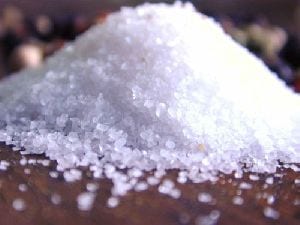
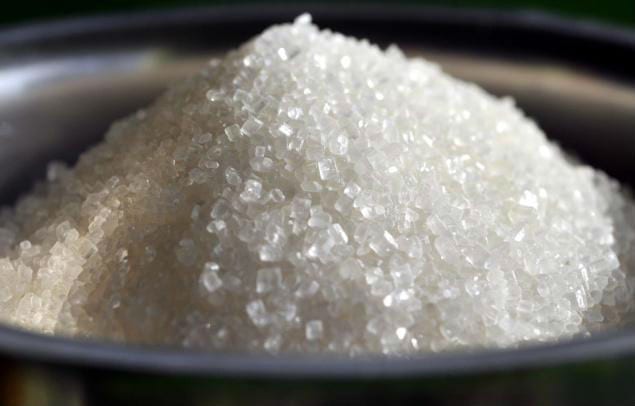
Crystal white sugar — refined white sugar crystals, white crystal sugar, crystal sugar: the trade uses all three for the same thing — is a refined, free-flowing white granulated sugar with a sucrose content of over 99.7%. It carries no molasses, no sediment and no external impurities, which is what gives it a white-to-clear grain and a clean, neutral sweetness.
It is the general-purpose refined grade: white enough and consistent enough to be used as a declared ingredient in food manufacturing, and suitable for direct consumption without further refining. In Brazilian trade practice the crystal band runs from ICUMSA 100 to ICUMSA 150, and this is the grade most often meant when a contract says "white sugar" without naming a figure.
We supply it in wholesale quantities from Brazil, in 20ft and 40ft containers, against a certificate of purity and an ICUMSA certificate.
Crystal white sugar specification
One purity figure is published for this grade — sucrose above 99.7%. The remaining parameters are certified for the lot shipped, on its certificate of analysis, and that is where a buyer should read them: a crystal grade is sold against a colour band, so the lot certificate is what makes the specification enforceable.
Analytical specification
| Parameter | Specification | Unit and method |
|---|---|---|
| Sucrose | Over 99.7% | Per cent by mass |
| Colour | White to clear grain; the certified ICUMSA figure for your lot is on its certificate of analysis | Solution colour in ICUMSA units, by ICUMSA method GS2/3-10 |
| Polarisation (pol) | ≥ 99.50°Z | Degrees Z, by polarimetry; certified per lot |
| Moisture | ≤ 0.10% | Per cent by mass, by loss on drying |
| Ash (conductivity) | ≤ 0.10% | Per cent by mass to three decimal places |
| Reducing sugars (invert) | ≤ 0.10% | Per cent by mass |
| Sulphur dioxide (SO₂) | ≤ 70 mg/kg | mg/kg; certified per lot |
| Granulation (grain size) | 0.40–0.80 mm mean aperture | Sieve analysis; mean aperture in mm |
| Magnetic particles | ≤ 4 mg/kg | mg/kg |
| Heavy metals — lead (Pb) | ≤ 0.5 mg/kg | mg/kg |
| Heavy metals — arsenic (As) | ≤ 1.0 mg/kg | mg/kg |
| Heavy metals — copper (Cu) | ≤ 1.5 mg/kg | mg/kg |
| Pesticide residues | Compliant with destination-market limits | Residue screen; certified per lot |
| Microbiology — total plate count | ≤ 200 cfu/10 g | Colony-forming units per 10 g |
| Microbiology — yeasts and moulds | ≤ 10 cfu/10 g | Colony-forming units per 10 g |
| Solubility | 100% soluble in water | — |
| Shelf life | 24 months in dry, covered, odour-free storage | — |
| Molasses | None | — |
| Sediment and external impurities | None | — |
Commercial specification
| Parameter | Specification |
|---|---|
| Product | Crystal white sugar, refined granulated |
| Form | Granulated, crystalline |
| Origin | Brazil — São Paulo, Minas Gerais and Goiás |
| Origin verification | Carbon-13 isotope testing |
| Packaging and net weights | 50 kg bags, 1,000 kg (1 MT) jumbo bags, or bulk; the format for your order is confirmed on quotation |
| Container loading | 20ft and 40ft containers |
| Shelf life | 24 months when stored in dry, covered, odour-free conditions at ambient temperature |
| Storage conditions | Dry, covered storage away from strong-smelling cargo; refined sugar takes up both water and odour |
| HS heading | 1701.99 — refined sugar other than raw, within Harmonised System heading 1701; the operative code is your national tariff line, see sugar grades and the HS code |
| Documentation | Certificate of purity and ICUMSA certificate; certificate of analysis on request |
Quality control sits at the end of the production line rather than at the start of it, which is why the sucrose figure holds from bag to bag.
Terms of supply at a glance
| Term | Crystal white sugar |
|---|---|
| Minimum order quantity | Confirmed on quotation — state your tonnage and we will confirm the smallest lot we can load to your destination |
| Incoterms offered | FOB, CFR and CIF (Incoterms 2020) |
| Port of loading | Santos, São Paulo, or Paranaguá, Paraná; confirmed on quotation |
| Lead time | Confirmed on quotation |
| Payment terms | Documentary letter of credit, or documentary collection; confirmed on quotation |
| Packaging | 50 kg bags, 1,000 kg jumbo bags or bulk. Repackers almost always want the 50 kg bag; manufacturers discharging into silos or hoppers usually want the jumbo bag |
| Inspection | SGS or an equivalent independent agency, at the buyer's option, on request |
| Certifications held | Confirmed on quotation and supplied with the specification pack |
Because this grade is sold against a colour band rather than a single figure, two things are worth settling in the contract and not afterwards: the ICUMSA ceiling you will accept, and whether consistency between shipments is part of the deal. Both are free to agree in advance and expensive to argue about at discharge.
How crystal white compares with the other grades
ICUMSA is a colour measurement, not a purity score: it reports the colour of the sugar in solution, and the lower the figure the whiter the sugar. Crystal white sits in the middle of the range we supply — whiter and cleaner than the raw grades, a step below the fully refined ones. For the full scale, see what the ICUMSA number measures.
-
ICUMSA 45 sugar — the standard refined export grade, 99.8% sucrose with around 0.04% moisture and a 45 ICUMSA colour ceiling. Specified where colour is part of the product, as in clear drinks, white confectionery and cosmetics.
-
Refined ICUMSA 35 sugar — refined sugar taken a stage beyond crystal white: purer sucrose, with drier and clearer grains.
-
Beverage-grade refined sugar — refined sugar supplied against the tighter parameter set that drinks production works to.
-
ICUMSA 100 cane sugar — 99.50% minimum polarisation, 0.15% ash maximum, nearly white, at a lower cost than the more refined grades. The sensible choice for high-volume work where a fully refined sugar is not required.
-
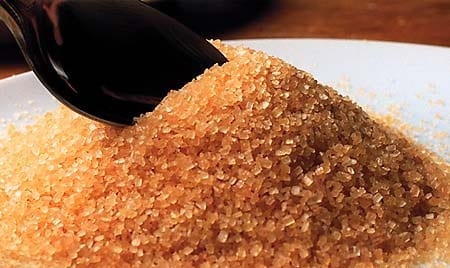
VHP raw cane sugar, grade E — raw and unrefined, brown to golden brown, bought as refinery feedstock and for fermentation.
If you are weighing crystal white against ICUMSA 100, the question is usually colour tolerance rather than purity: both are palatable, consistent sugars, and the cheaper grade is the right answer whenever your finished product can carry a slightly off-white sugar. If you are weighing it against ICUMSA 45, the question is whether a declared colour ceiling matters to your customer or only to your process.
Who buys crystal white sugar
Crystal white is bought by the kind of operation that needs a dependable white sugar in volume and does not want to pay for a specification it will not use:
-
Bakeries, dessert and confectionery lines, and chocolate manufacturers
-
Jam, sauce and dairy producers
-
Drinks manufacturers
-
Hotels, restaurants and catering
-
Wholesalers and distributors repacking for retail or foodservice
-
Pharmaceutical manufacturing, as an excipient
-
Chemical industry, for special applications
Its crystalline form is what makes it predictable in production. It blends readily, melts uniformly and holds its flavour and texture through processing, so a formulation scales from a trial batch to an industrial run without being re-tuned.
Origin, verification and supply
The sugar is sourced from Brazil's leading producing states — São Paulo, Minas Gerais and Goiás — and its origin is verified by carbon-13 isotope testing rather than asserted on paperwork. For a buyer who has to document provenance to a customer or a customs authority, that test is the point: it is an analytical result, not a declaration.
Supply runs through our partnership with Grupo Centena, which gives us direct contact with the manufacturer instead of a chain of intermediaries. In practice that is what lets us hold a specification steady across repeat orders and answer a technical question without going away to ask someone else.
Packaging, containers and documentation
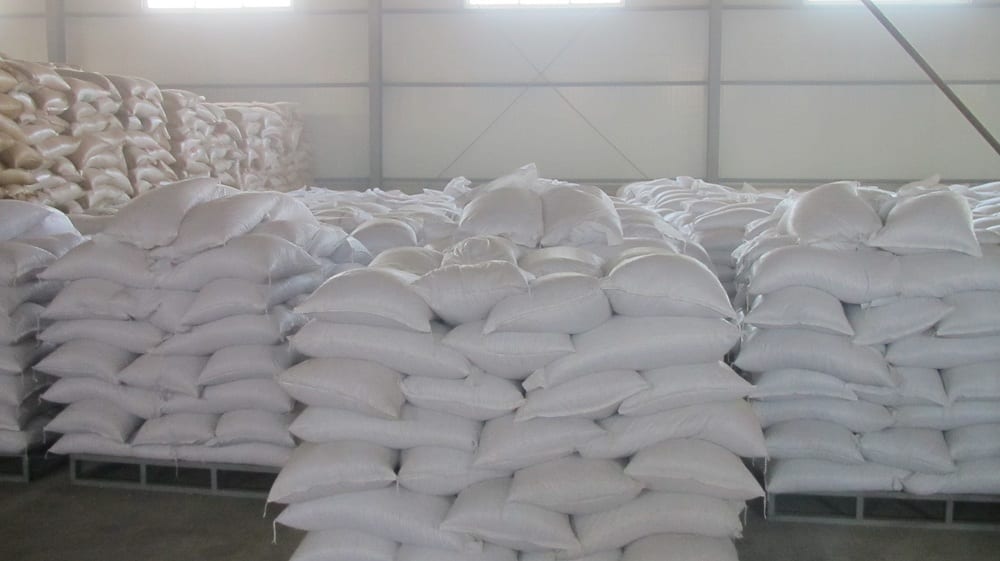
Orders load in 20ft and 40ft containers, in 50 kg bags, 1,000 kg jumbo bags or bulk. Packaging is chosen to suit what happens at the far end — wholesale distribution, retail repacking or direct processing — rather than fixed by us.
The documentary set for a cargo:
-
Certificate of purity and ICUMSA certificate, with the certificate of analysis for the lot on request
-
Certificate of origin, issued through an accredited Brazilian certifier. Where your market applies a preferential tariff, this document is what sets the duty you pay
-
Quality and weight certificates, and an independent inspection report from SGS or an equivalent agency where the contract calls for one
-
Phytosanitary certificate where the destination requires it
-
Commercial invoice, packing list and bill of lading
Import requirements differ by country, so tell us the destination early and the set is confirmed against it in the quotation.
How crystal white sugar is priced
Sugar is a traded commodity, so there is no list price worth publishing. The world prices raw sugar against the ICE No. 11 contract and refined white against the London No. 5 white sugar contract; a crystal grade is quoted between the two, closer to the refined benchmark the lower its colour ceiling. What you pay therefore depends on where those contracts sit on the day we quote, plus the differential for the grade, the Incoterm, the destination, the packaging and the volume.
That is a straight answer rather than an evasive one: a number on this page would be wrong within the week. The mechanism, step by step, is set out in how ICUMSA 45 sugar is priced per tonne. Send an enquiry and we will price your lot against the market at the time you ask, firm for a stated validity period.
Frequently asked questions
Is crystal white sugar the same as refined white sugar crystals? Yes — they are two names for the same product, and so is "white crystal sugar". What matters commercially is not the name but the colour figure certified for the lot, because the crystal band spans ICUMSA 100 to 150.
Is crystal white sugar the same as refined sugar? Not quite. Crystal white is a refined white sugar, but the grades sold specifically as refined are taken a stage further — ICUMSA 35 has a purer sucrose content and a drier, clearer grain than crystal white. Crystal white is the right choice when you need a clean white sugar and do not need the tightest colour specification.
What ICUMSA grade is crystal white sugar? ICUMSA measures colour in solution, so a crystal white sugar sits above the fully refined grades on the scale and well below the raw ones. In Brazilian trade practice the crystal sugar band runs from ICUMSA 100 to ICUMSA 150. The figure certified for your lot is on its certificate of analysis, and you can contract on a specific ceiling instead of the band.
What polarisation, ash and moisture does it carry? All three are stated on the certificate of analysis for the lot rather than published as headline figures for the band — polarisation by polarimetry, ash as conductivity ash, moisture by loss on drying. If your specification sets ceilings, send them with the enquiry and we will quote against them.
Can it be used as a pharmaceutical excipient? Sugar of this purity is used in pharmaceutical manufacturing as an excipient in tablets, syrups and lozenges, where it carries flavour and helps deliver the active compound. If your formulation has to be made with a pharmacopoeia-compliant sucrose, tell us which monograph you work to and we will confirm before you order.
What documents ship with the order? A certificate of purity and an ICUMSA certificate, plus the certificate of origin, quality and weight certificates and the export and logistics documentation for your destination. A certificate of analysis is available on request, and a phytosanitary certificate where the destination requires one.
What is the minimum order quantity, and on which Incoterms do you sell? The minimum is confirmed on quotation, because it depends on the destination and the packaging. We sell FOB, CFR and CIF. State the tonnage, the port and the basis you want and all three come back together with the price.
Do you sell to wholesalers and distributors, or only to manufacturers? Both. The grade is bought in container loads by manufacturers using it as an ingredient and by wholesale sugar distributors repacking it for retail or foodservice. Packaging is specified to suit whichever you are.
Request a quotation
To price an order we need four things: the grade, the volume, the destination port and the Incoterm you want quoted. With those we can quote against the market, confirm packaging and get the documentation in order.
If you are still choosing between grades, tell us what you are making and we will say which one fits — including where a cheaper grade would do the job. The enquiry form is below, or you can contact us directly.
Other sugar grades we supply
Contact us
Fields marked with an asterisk are required.