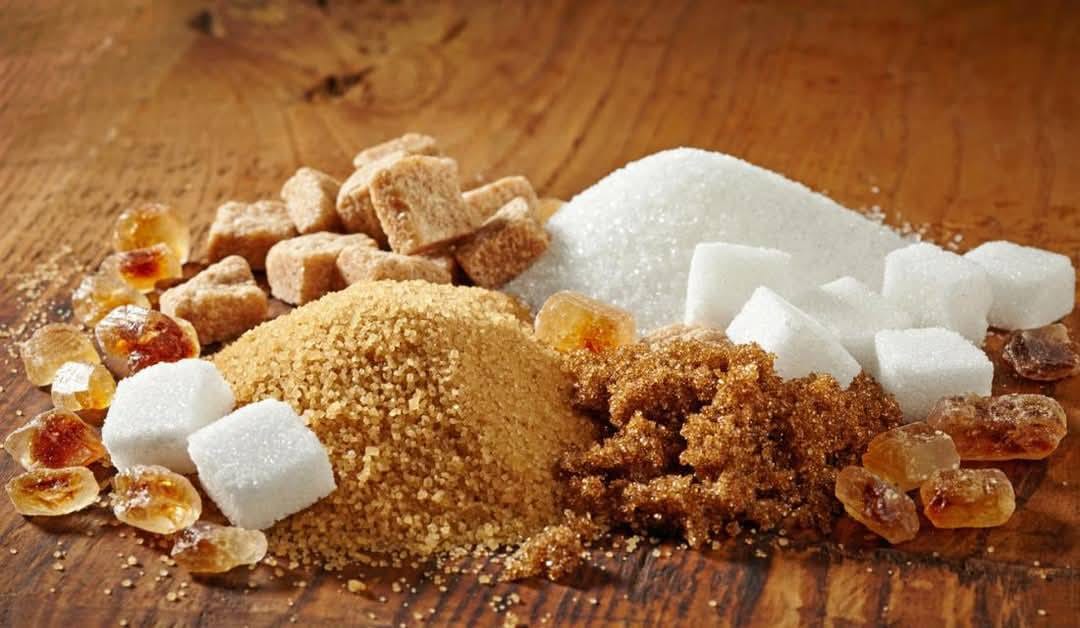
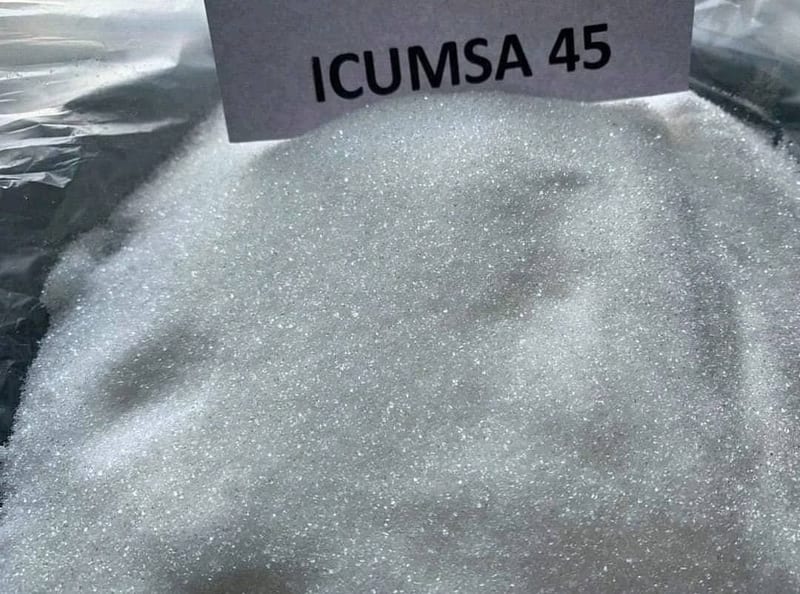
Heap of ICUMSA 45 sugar, showcasing its fine, white granules, indicative of high purity and quality.
ICUMSA 45 sugar is not sold at a list price. It is quoted as a differential to the ICE No. 11 raw sugar futures contract, plus a refined white premium, then adjusted for your Incoterm, your packaging and your tonnage — and the quotation is valid only for a stated window. Anyone who publishes a single number per tonne and leaves it on a web page for a year is publishing a number that was wrong within days of being typed. This page explains the mechanism instead, so that when you receive a quotation you can tell whether it is a serious one.
How a price per tonne for ICUMSA 45 is built
A quotation for refined white sugar out of Brazil is assembled in four layers, in this order.
1. The world raw sugar price. The underlying benchmark is the ICE No. 11 contract — raw cane sugar, FOB, quoted in US cents per pound. It is a public, continuously traded number, which is why every serious seller references it rather than inventing a figure. Converting cents per pound to US dollars per metric tonne is a fixed arithmetic step, not a negotiation.
2. The white premium. Refined white sugar is not raw sugar. The difference between the two is the cost of refining, and the trade quotes it as a premium over the raw benchmark — in London the White Sugar No. 5 contract performs the same role for refined. The premium is not constant: it widens when refining capacity is tight and narrows when it is not. This layer, not the raw price, is where most of the movement in a refined quotation actually lives.
3. Grade and specification. Within refined white, colour and polarisation carry their own differentials. ICUMSA 45 sits at the top of the refined range, so it prices above ICUMSA 100 and well above a raw VHP cargo. If you are weighing one grade against another on price, the ICUMSA colour scale and grade chart sets out what you gain and give up at each step.
4. Your terms. The same cargo has several legitimate prices depending on how it is sold:
-
Incoterm. FOB Santos or Paranaguá is the price alongside the vessel in Brazil. CFR or CIF to your port adds ocean freight and, under CIF, marine insurance. A CIF number is always larger than the FOB number for the same sugar, and comparing one against the other tells you nothing.
-
Packaging. 50 kg polypropylene bags, 1 MT jumbo bags and bulk are three different costs of handling, and they are not interchangeable. Bagged cargo carries the bag, the palletisation and the stuffing labour.
-
Volume and shipment pattern. A single 20ft container and a multi-shipment contract across a season are priced differently, because the seller's exposure is different.
-
Timing. The Centre-South crush runs from roughly April to November. An enquiry placed against new-crop availability and one placed against stored sugar in February are answered by different parts of the supply chain.
-
BRL/USD. Brazilian costs are incurred in reais and the cargo is sold in dollars. A weaker real lowers a Brazilian seller's dollar cost base; a stronger one raises it.
Why no honest supplier prints a price per tonne
Three of the four layers above move daily. A printed figure is therefore either a historical record or an invitation to renegotiate on arrival — and in this trade the second is a recognised pattern: a low published number attracts the enquiry, and the real number appears after the buyer has committed time.
A quotation that is worth having states its own expiry. Ours states the basis it was struck on, the Incoterm, the packaging, the tonnage and how long it stands. If any of those five are missing from a quotation you have been sent, you do not have a price; you have a conversation starter.
What a serious quotation contains
Ask for these and you can compare two offers side by side:
-
The grade and full specification, including the ICUMSA colour ceiling — not just the words "ICUMSA 45".
-
The Incoterm and named port, written as the Incoterms rules write it: FOB Santos, CFR Jebel Ali.
-
The packaging and net weight per unit, and how many units per container.
-
The tonnage the price applies to, and whether it holds for a repeat shipment.
-
The validity period of the quotation.
-
The payment mechanism — documentary letter of credit, documentary collection, or otherwise.
-
The documents that travel with the cargo: certificate of analysis, ICUMSA certificate, certificate of origin, weight and quality certificates, third-party inspection where you require it.
On our side, minimum order quantity, Incoterms offered, port of loading, lead time, payment terms and packaging are confirmed on quotation, because each of them moves with destination and volume. The specification figures are stated on the certificate of analysis issued for your lot.
How to read two quotations that disagree
Most apparent price gaps in this trade are not price gaps at all. Before you conclude that one offer is cheaper, check in this order:
- Are both on the same Incoterm? An FOB number and a CIF number are not comparable.
- Are both the same grade? ICUMSA 45 against ICUMSA 100 is a grade difference being presented as a discount.
- Is the packaging the same? Bulk against 50 kg bags is a handling difference.
- Is the tonnage the same? A price for 500 MT is not a price for one container.
- Is the cheaper offer still valid? A number with no stated expiry usually has one.
- Who is the counterparty? A broker chain quoting a mill's cargo it has no allocation to can quote anything, because it will never have to ship it.
That last point is the one that costs buyers money, and it is worth reading the checklist for qualifying and verifying a bulk sugar supplier before you compare anything.
Get a price for your cargo
We quote ICUMSA 45 sugar from Brazil against your written specification. Send the grade, the tonnage, the destination port, the Incoterm you want and your packaging, and you will get a quotation that states its own basis and validity rather than a number on a page.
Request a quotation — or read how a purchase from Brazil actually proceeds, step by step, before you send one. If you want the broader market picture behind the benchmark, our analysis of what moves sugar prices covers the crop cycle, freight and currency in more detail.
Recent Posts
The Ultimate Guide to Buy Sugar in Bulk: Smart Tips and Benefits
The Ultimate Guide to Wholesale Sugar Suppliers: How to Choose the Best Partner for Your Business

Unlocking the Potential of Sugar Wholesale: A Comprehensive Guide