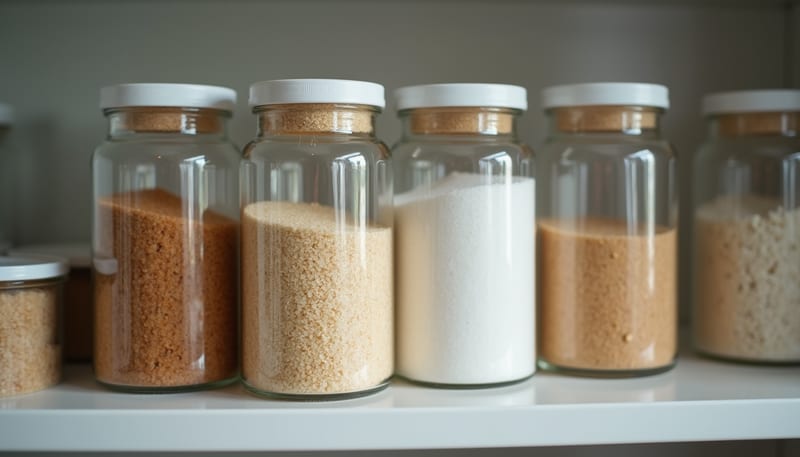
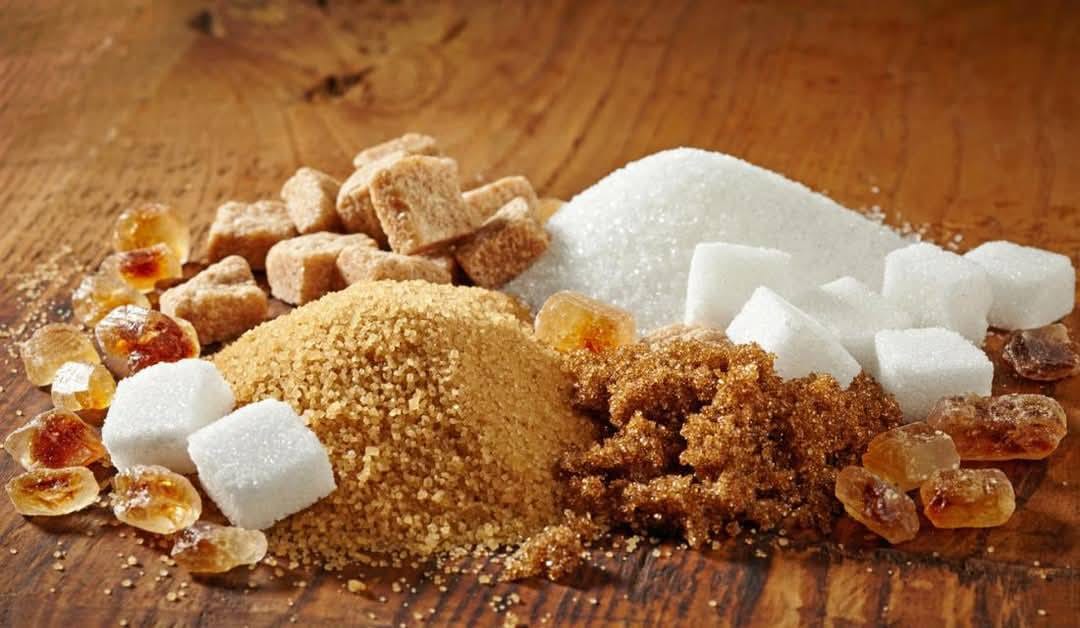
Raw, brown and refined white sugar side by side: the first decision in any purchase is which grade you need
To buy sugar from Brazil you send three things — grade, tonnage and destination port — and you receive a quotation against them. Everything else in the process follows from those three. This page sets out the full sequence, what each Incoterm makes you responsible for, which documents travel with the cargo, and the terms we confirm when we quote. It is written for a buyer in Abu Dhabi, Mumbai, Lagos or Jakarta as much as for one in Europe or North America.
The three things to put in your first message
An enquiry without these three facts gets a question back instead of a price. Put them in your first message:
- Grade. The ICUMSA figure, not just "white sugar". If you are not sure which grade your process needs, the ICUMSA colour scale and grade chart explains what each number means and what it is normally used for.
- Tonnage, and whether this is a single shipment or a contract across several.
- Destination port, named — and the Incoterm you want it quoted on.
Useful to add, if you know them: packaging (50 kg bags, 1 MT jumbo bags or bulk), your target shipment window, and any inspection or certification your importing country requires. If you want those settled before you write, the five decisions that come before price works through grade, unit, Incoterm, counterparty and documents in order.
Which grades ship out of Brazil
Brazil exports across the whole ICUMSA range, and the grade you choose is a specification decision, not a quality ranking:
- ICUMSA 45 refined white — the top of the refined range, used in beverages, confectionery, pharmaceuticals and cosmetics.
- ICUMSA 35 refined white — the most refined grade in the set.
- Refined white sugar crystals — granulated, multi-refined, for baking, desserts and beverage production.
- Beverage grade refined cane sugar — specified for soft-drink bottling.
- ICUMSA 100 cane sugar — a mid grade for high-volume applications that do not need full refinement.
- Raw brown cane sugar, ICUMSA 600–1200 — the VHP-type raw export grade, bought by refineries, distilleries and fermentation plants.
The purchase sequence, step by step
1. Enquiry
You send grade, tonnage and destination port. We confirm whether we can serve it and ask for anything missing.
2. Specification confirmed in writing
Before any price is agreed, the specification is written down: ICUMSA colour ceiling, the parameters stated on the certificate of analysis, packaging and net weight per unit. A specification agreed by email is the document you hold the shipment to.
3. Quotation
The quotation states the Incoterm, the named port, the packaging, the tonnage it applies to, the payment mechanism and how long it stands. Price is quoted against the ICE No. 11 raw sugar contract as the underlying benchmark, with a premium for refined white — how that number is built is worth reading before you compare offers.
4. Contract
A sales contract records the specification, quantity and tolerance, Incoterm and port, shipment window, payment terms, inspection regime and the documents to be presented.
5. Payment mechanism opened
For export cargoes the common instruments are a documentary letter of credit confirmed through a bank you nominate, or documentary collection. Both are designed so that documents and money move against each other rather than on trust. Our payment terms are confirmed on quotation, because they move with volume, destination and whether the trade is a first shipment or a repeat.
6. Shipment and documents
The cargo is stuffed and loaded at the port of loading, and the document set is presented through the banking channel.
Who pays for what: FOB, CFR and CIF
Nearly every disagreement about price in this trade is actually a disagreement about Incoterm. Under the Incoterms rules:
| FOB named port of shipment | CFR named port of destination | CIF named port of destination | |
|---|---|---|---|
| Export clearance in Brazil | Seller | Seller | Seller |
| Loading on board | Seller | Seller | Seller |
| Ocean freight | Buyer | Seller | Seller |
| Marine insurance | Buyer | Buyer | Seller (minimum cover) |
| Risk passes | On board at loading port | On board at loading port | On board at loading port |
| Import clearance and duty | Buyer | Buyer | Buyer |
Two points first-time buyers often miss. Under CFR and CIF the seller books the ship, but the cargo is at your risk from the moment it is loaded in Brazil. And CIF insurance only has to meet the minimum Institute Cargo Clauses (C) cover, so buy more if your bank or your stock value needs it.
Documents that travel with the cargo
- Commercial invoice and packing list, which your customs broker files.
- Bill of lading, the title document your bank releases against payment.
- Certificate of analysis for the loaded lot.
- ICUMSA certificate, confirming the colour grade.
- Certificate of origin, which decides whether a preferential duty rate applies in your country.
- Weight and quality certificates, plus an inspection report if you appointed SGS, Intertek or another agency.
- Phytosanitary certificate, if your country requires one.
What we confirm when we quote
We state the minimum lot, lead time and payment terms on each quotation rather than on this page, because they change with the grade, the tonnage and the port.
Brazil loads bulk sugar principally through Santos and Paranaguá, and the Centre-South crush runs from roughly April to November, which is what makes shipment timing a real part of the conversation rather than an afterthought.
Before you commit: verify the counterparty
Most losses in this trade come from paying a broker who never had the cargo. Before you sign, check that the seller is a registered exporter and can show an allocation; the bulk supplier checklist tells you what to ask for.
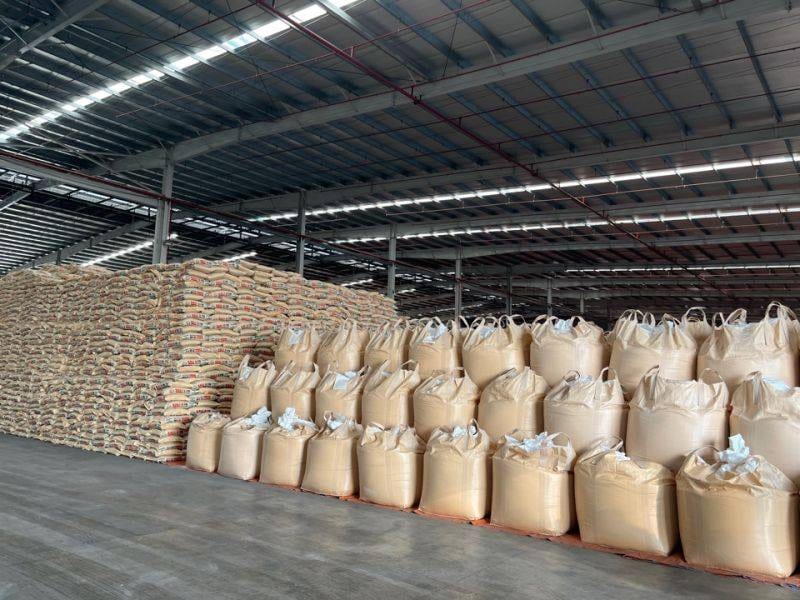
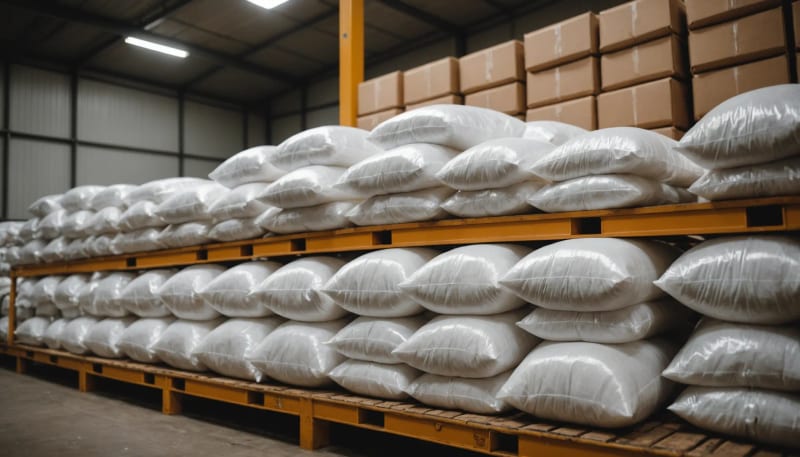
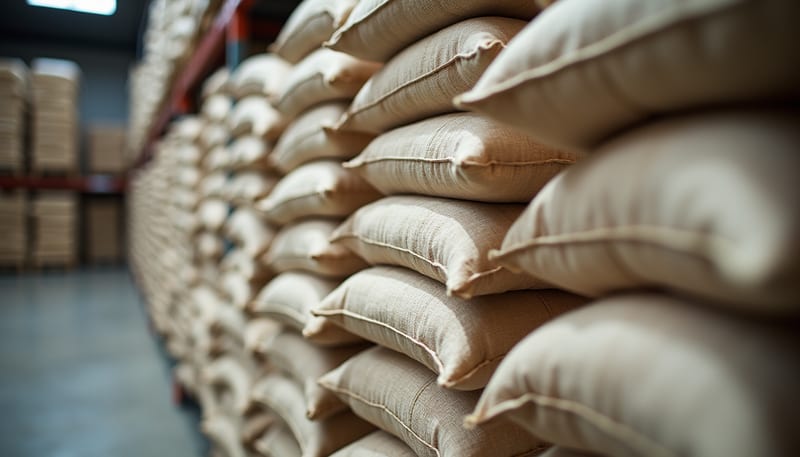
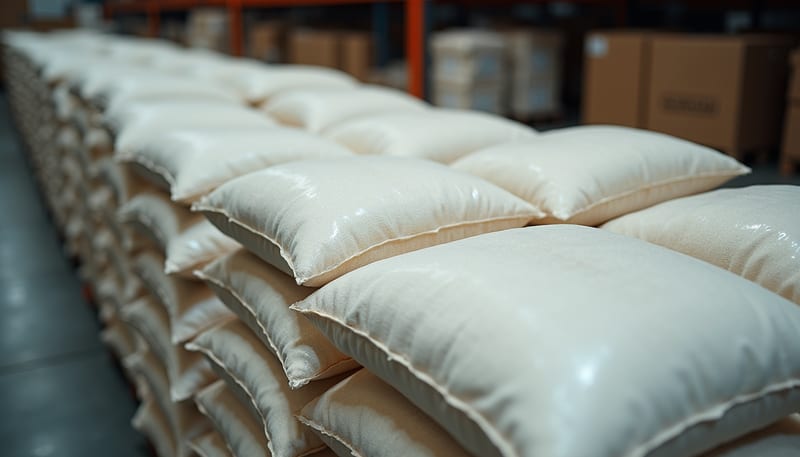
Sacks and bags of Brazilian sugar neatly stocked in a spacious warehouse, highlighting a large-scale supply ready for distribution.
Further reading for first-time buyers
- Incoterms for sugar: FOB vs CFR vs CIF
- SBLC vs letter of credit: how sugar is paid for
- Sugar inspection: SGS, COA and phytosanitary certificates
- Sugar trading companies and how the physical trade works
- Sugar trade glossary
Start an enquiry
When you have those three facts, contact us and the first reply will be a priced offer.