Most Brazilian sugar leaves the country through two ports: Santos, in São Paulo state, which handles the largest share of Brazil's sugar exports and is the biggest port in Latin America, and Paranaguá, in Paraná state, the main alternative in the south. Both load bulk raw sugar into ships and bagged sugar into containers. For a buyer, the port decides the FOB price basis, the loading time and much of the delivery risk. This guide explains how sugar exports work at each port and what to put in your contract.
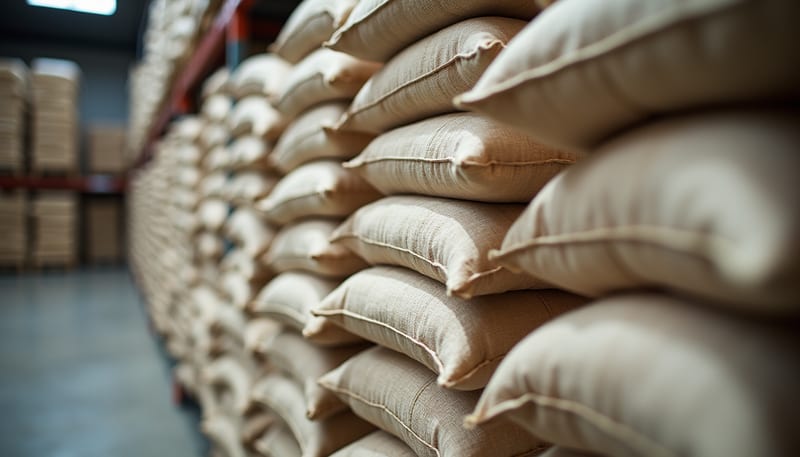
Bagged sugar waiting at a warehouse before it is stuffed into containers for export
Santos vs Paranaguá at a glance
| Port of Santos | Port of Paranaguá | |
|---|---|---|
| State | São Paulo | Paraná |
| Role in sugar | Brazil's main sugar export port | Second main outlet for Centre-South sugar |
| Sugar hinterland | São Paulo, Minas Gerais, Goiás, Mato Grosso do Sul | Paraná, Mato Grosso do Sul, parts of São Paulo |
| How sugar arrives | Truck and rail | Mainly truck, some rail |
| Bulk sugar | Several dedicated sugar terminals with large warehouses | Bulk sugar berths shared with other agricultural cargo |
| Containers | Brazil's largest container port, many direct services | Busy container terminal with services to main trade lanes |
| Typical Incoterm | FOB Santos is the reference price basis for Brazilian sugar | FOB Paranaguá, quoted on the same benchmark |
We quote both. Which one we use for your order depends on the mill, the shipment month and where container or berth space is available.
How sugar gets to the port
Sugar moves from Centre-South mills to the coast by truck and by rail. Rail lines bring large volumes from inland São Paulo and neighbouring states to Santos, where sugar terminals have rail unloading. Trucks carry the rest, particularly bagged sugar for container stuffing.
The inland leg is short compared with the sea voyage, but it is crowded. The cane crush (about April to November) overlaps with the soybean and maize export seasons, so roads, rail and berths are busiest in exactly the months when most sugar ships. The Brazil harvest calendar shows how the seasons overlap.
Bulk sugar exports: loading a ship
Most of Brazil's sugar exports are raw VHP sugar in bulk, loaded straight into the holds of bulk carriers for refineries abroad.
- Storage at the terminal. Sugar is held in covered warehouses at the port terminal, often for weeks before a vessel arrives.
- Line-up. Ships wait in a queue, or line-up, for a berth. Shipping agents publish weekly sugar line-ups for Santos and Paranaguá, which traders watch closely.
- Loading. Conveyors and ship loaders move the sugar into the holds. Sugar is hygroscopic, so loading stops when it rains, a common cause of delay in the wetter months.
- Inspection. An independent surveyor samples the cargo during loading for polarisation, moisture and weight. These results go on the certificates.
For bulk buyers, the key contract terms are the loading rate, laytime and demurrage: who pays when the ship waits. Our guide to laytime and demurrage in sugar shipping explains how the waiting time is counted. See VHP sugar for how raw sugar is specified.
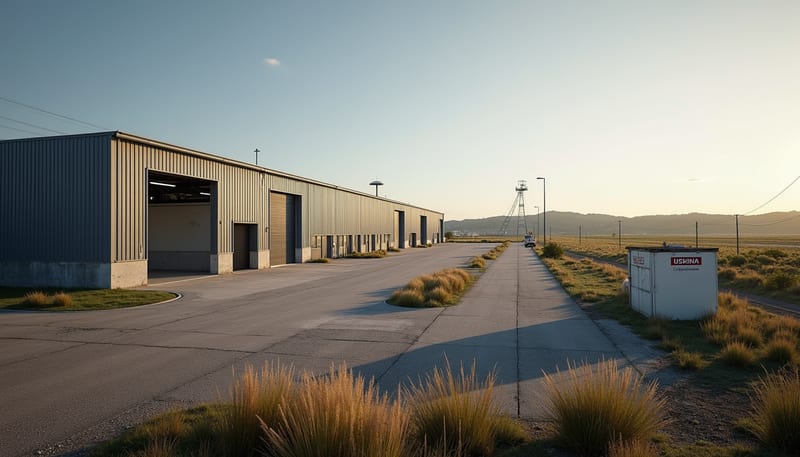
Large covered warehouses near the port hold sugar until the vessel or container is ready
Container sugar exports
Refined sugar such as ICUMSA 45, and smaller raw lots, usually ship in 20 ft or 40 ft containers:
- Bagging. Sugar is packed at the mill or a packing station in 50 kg bags or 1 MT jumbo bags, with liners where needed.
- Stuffing. Bags are loaded into containers, often lined with kraft paper and desiccant to reduce condensation damage.
- Weighing and sealing. Containers are weighed (VGM declaration is required for every container) and sealed.
- Gate-in and loading at the container terminal for the booked vessel.
A 20 ft container typically carries about 25 tonnes of bagged sugar; heavier loads depend on road and route weight limits. The packaging options and container loading are explained in sugar packaging for export.
Export documents prepared at the port
While the cargo is loaded, the exporter prepares the document set:
- Commercial invoice and packing list
- Bill of lading, issued by the carrier once the cargo is on board
- Certificate of analysis and weight and quality certificates from the surveyor
- Certificate of origin, issued through a SECEX-accredited entity, and legalised where the destination requires it
- Phytosanitary certificate, issued by Brazil's Ministry of Agriculture where the destination asks for one
- Export declaration registered in Brazil's Siscomex system
What each document does at your end is explained in how to import sugar.
Typical delays and how to plan for them
- Rain. Bulk loading stops in rain. Allow extra time between December and March, the rainy season in the south-east.
- Congestion during the crush. Line-ups grow from June to October when sugar and grain compete for berths.
- Container availability. Empty containers can be scarce at peak, and services can roll cargo to the next vessel.
- Document timing. Certificates and legalisation take days after loading; under a letter of credit, allow for this before the presentation deadline.
Practical tip: agree a shipment month, not a single date, and make sure your letter of credit allows time for documents after the bill of lading date.
FOB Santos: why it is the reference price
Because Santos handles so much of Brazil's sugar, "FOB Santos" has become the reference basis for Brazilian sugar offers. An FOB Santos price covers the sugar, inland freight, port handling and loading onto your vessel; you pay ocean freight and insurance from there. A CFR or CIF price adds those costs to get the sugar to your port.
To compare offers, put them all on the same basis. The build-up of a quotation is explained in ICUMSA 45 sugar price per ton, and the overall export chain in Brazil sugar exports.
Other Brazilian sugar ports
Santos and Paranaguá serve the Centre-South, where about nine-tenths of Brazilian sugar is made. The smaller North-East crop, harvested roughly September to March, ships from ports closer to its mills, such as Maceió in Alagoas and Recife/Suape in Pernambuco. Those ports can be useful for buyers who need sugar outside the Centre-South season; see Brazil's sugar-producing regions.
Shipping sugar from Santos or Paranaguá with us
We are based in Paraná and ship from both ports. For each order we name the port of loading on the quotation, along with the Incoterm, packaging, minimum lot and shipment window. Send us your grade, tonnage and destination port and we will tell you which port suits your shipment.
Frequently asked questions
Which port exports the most sugar in Brazil? The Port of Santos, in São Paulo state, handles the largest share of Brazil's sugar exports.
What does FOB Santos mean for sugar? The seller delivers the sugar loaded on board your vessel at Santos; from that point freight, insurance and risk are yours.
Can sugar be loaded in the rain? No. Bulk sugar loading stops during rain because sugar absorbs moisture, which is why loading times can stretch in wet months.
How much sugar fits in a container from Santos? About 25 tonnes of bagged sugar in a 20 ft container is typical, subject to route weight limits.
Is Paranaguá cheaper than Santos? Not automatically. The FOB price depends on the mill's location, inland freight and terminal costs, which differ by order. We quote whichever port gives the better delivered result for your shipment.