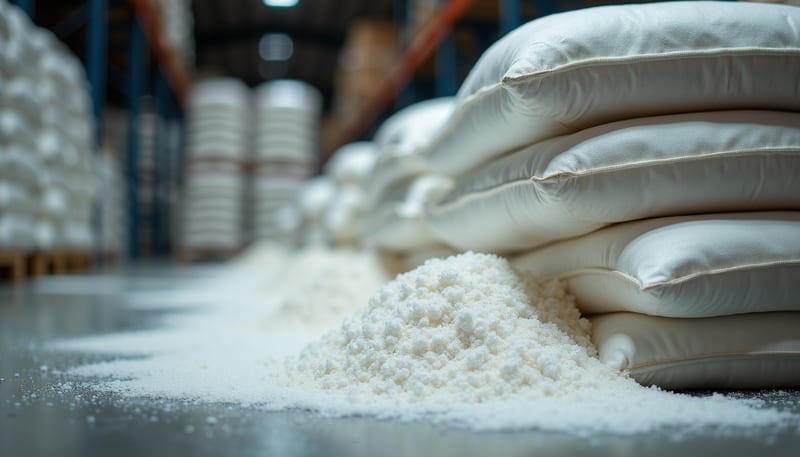
Demurrage is the agreed daily amount a charterer pays the shipowner when a vessel is kept at the loading or discharge port beyond its laytime, the time the charter allows for cargo work at no extra cost. If loading or discharge finishes early, the owner may instead pay despatch. For a bulk sugar cargo, who ends up carrying that cost depends on two contracts: the charter party between ship and charterer, and the sale contract between seller and buyer, which passes the liability along the chain. This guide explains how laytime is counted, when demurrage starts, how the sugar trade's standard rules deal with it, and how container demurrage differs, so you can read a sugar offer's shipping terms before you sign.
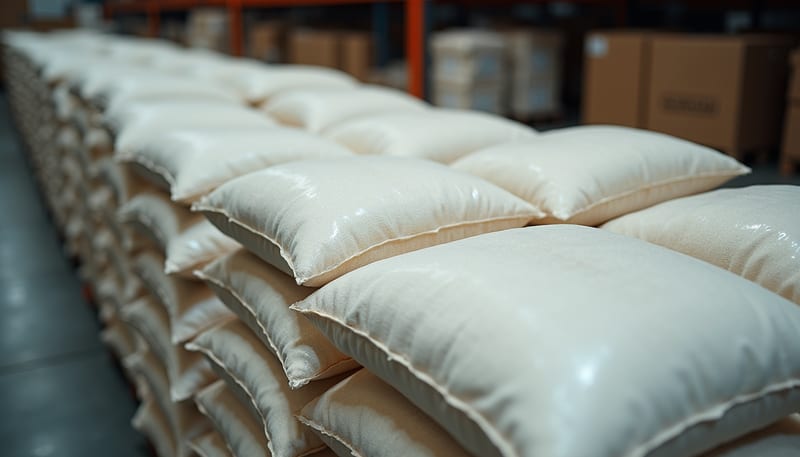
Every day a ship waits for its sugar to be loaded is a day someone pays for under the laytime and demurrage clauses
Laytime, demurrage and despatch: the definitions
The shipping industry's reference text is the Laytime Definitions for Charter Parties 2013, published by BIMCO together with CMI, FONASBA and the Baltic Exchange. In summary:
| Term | What it means | Who pays whom |
|---|---|---|
| Laytime | The period agreed between the parties during which the owner makes the vessel available for loading or discharging without payment additional to the freight | No one: it is included in the freight |
| Demurrage | An agreed amount payable to the owner for delay to the vessel beyond laytime, for which the owner is not responsible | Charterer pays owner |
| Despatch | An agreed amount payable by the owner if loading or discharging is completed before laytime expires | Owner pays charterer |
Demurrage works like liquidated damages: the rate is fixed in advance as a daily figure in the charter, so the owner does not have to prove its actual loss. Despatch is optional and is often set at half the demurrage rate. Some charters are "free despatch" and pay nothing for time saved.
Note what the definitions do not say. English law gives no general right to demurrage: it exists only because the contracts create it, as a 2023 note on sugar contract rules by the commodities lawyers Stephenson Harwood points out. That is why the exact wording of each clause matters so much.
How laytime is calculated for a sugar cargo
Laytime is usually expressed either as a fixed number of days or, more often for bulk sugar, as a loading or discharge rate: so many tonnes per day. The allowed time is the cargo quantity divided by the rate.
A simple illustration with round numbers: a vessel loads 30,000 tonnes of raw sugar at an agreed 6,000 tonnes per weather working day. Laytime allowed is 30,000 ÷ 6,000 = 5 weather working days. If, after all the agreed exceptions are applied, the ship actually used 8 days, it spent 3 days on demurrage. If it finished in 4, it saved 1 day and may earn despatch.
The words around the rate change the count:
- Weather working day (WWD): a working day on which weather does not stop cargo work. Rain matters for sugar, because bulk and bagged sugar loading stops in wet weather to keep the cargo dry, and that time is excluded from laytime.
- SHINC: Sundays and holidays included, so laytime runs seven days a week.
- SHEX: Sundays and holidays excepted. Whether time counts if work actually happens on those days depends on the clause ("unless used").
- Reversible laytime: one combined allowance for loading and discharge, so time saved at one port can be used at the other.
- Turn time or notice time: a fixed period after notice of readiness before laytime starts.
The record behind the calculation is the statement of facts, the port agent's timeline of arrival, notice of readiness, berthing, start and end of loading, stoppages and their reasons. Laytime and demurrage claims are built from it, so buyers and sellers should ask for it and check it against their own records.
When laytime starts: notice of readiness
Laytime does not start when the ship drops anchor. As a rule, three things must happen first:
- The vessel has arrived. Under a berth charter it must be at the berth. Under a port charter it must be within the port, at the usual waiting place, at the charterer's disposal.
- The vessel is ready. Holds clean and dry and fit for sugar, gear working, documents and clearances in order. A ship whose holds fail inspection is not ready, even if it is alongside.
- A valid notice of readiness (NOR) is tendered, and any notice or turn time has passed.
At congested ports the charter decides who carries the waiting time before berthing. Clauses such as WIBON (whether in berth or not) and WIPON (whether in port or not) let the master tender NOR while the ship is still waiting, which moves the risk of the queue from the owner to the charterer. Without them, the owner bears the wait until the ship reaches its berth.
This is where Brazilian sugar logistics meets the contract. Vessels queue in a published line-up at Santos and Paranaguá, and queues lengthen in the peak of the Centre-South crush when sugar and grains compete for berths. The Santos and Paranaguá port guide explains how line-ups and loading work.
"Once on demurrage, always on demurrage"
Laytime exceptions such as rain, Sundays or shifting berths stop the laytime clock. The BIMCO definitions state the default rule for what happens once laytime has run out: the vessel is on demurrage, and later exceptions no longer apply unless the charter party expressly says they do. In practice this means that a rainy week after laytime has expired is usually paid for in full, while the same week inside laytime would have cost nothing. Strikes and port closures are common subjects of special wording, so read the exceptions clause with this rule in mind.
Who pays demurrage under FOB, CFR and CIF sugar sales
The party that charters the vessel owes demurrage to the shipowner. The sale contract then decides whether that cost can be passed to the other side.
- FOB: the buyer charters the ship and owes the owner any demurrage at the loading port. The buyer will want the seller to deliver the sugar at a guaranteed loading rate, so that delay caused by the seller's cargo is recovered from the seller. As the Stephenson Harwood note puts it, generally the seller is liable for demurrage in an FOB sale.
- CFR and CIF: the seller charters the ship. Load-port delay is the seller's problem, but discharge-port delay arises in the buyer's country, so the seller will pass discharge demurrage to the buyer through a guaranteed discharge rate in the sale contract. Generally the buyer is liable for demurrage at discharge in a CFR or CIF sale.
The principle is "back-to-back": the sale contract's laytime terms should match the charter party's, or one party ends up paying the owner more than it can recover. For a full comparison of the delivery terms, see Incoterms for sugar: FOB vs CFR vs CIF.
What the sugar trade's standard rules say
Most international raw and white sugar contracts incorporate one of three sets of rules. Each treats laytime and demurrage differently.
Sugar Association of London (SAL) rules
The SAL rules govern much of the world's raw sugar trade, including VHP raw cane sugar from Brazil. Under the August 2025 rules for bulk FOB contracts, the buyer must give the seller the vessel's name, its expected time of arrival and the tonnage to be loaded at least ten days before that arrival, unless the contract states otherwise. If the seller asks, the buyer must provide the vessel's demurrage and despatch rates before the notice of readiness is tendered. Unless the contract says otherwise, laytime counts in accordance with the unamended Sugar Charter-party 1999, the standard voyage charter form for bulk sugar, and the same applies to laytime at discharge under the CIF and CFR free-out rules. The Sugar Charter-party 1999 sets laytime from an average rate agreed between the parties, based on at least four hatches being available. For bagged sugar shipped in containers under CFR and CIF terms, the SAL rules make the buyer liable for container demurrage and quay rent at destination according to the carrier's standard terms.
Refined Sugar Association (RSA) rules
The RSA rules, used for white and refined sugar, leave laytime and demurrage largely to the parties. For FAS and FOB contracts they require the buyer to provide the vessel's demurrage and despatch rates before tendering notice of readiness, if the seller asks. Everything else must be written into the contract.
ICE Futures U.S. Sugar No. 11 rules
The Sugar No. 11 futures contract is delivered FOB at the origin port. Its delivery rules are the most prescriptive of the three on vessel nomination: the receiver must nominate the vessel, its ETA, quantity and demurrage rates in writing at least seven calendar days before the expected readiness. Where congestion stops a vessel berthing, berthing priority follows effective notices of readiness. Where several shippers load one vessel, laytime can be pro-rated by tonnage. The 2023 law-firm note summarises the rules then in force, so check the current rulebook before relying on any detail.
Container demurrage and detention are different charges
Many buyers of refined ICUMSA 45 sugar import in 20-foot containers of 25 or 50 kg bags rather than in bulk. Their "demurrage" is not a charter-party charge at all, but a carrier or terminal charge for holding equipment beyond the free time:
- Container demurrage: the full container stays inside the terminal after free time expires.
- Detention: the container is outside the terminal, for example at the buyer's warehouse, and is returned empty late.
Both are charged per container per day under the carrier's or terminal's tariff, so a few days' delay in customs clearance or phytosanitary inspection multiplies quickly across a 20-container order. In the United States, the Federal Maritime Commission's rules at 46 CFR Part 541 set what a demurrage or detention invoice must show, including the free time allowed and the dates charged, and require it to be issued within 30 days of the charge last being incurred. Other countries have their own rules, so ask your forwarder what applies at your port.
How buyers keep demurrage under control
- Agree the rates in writing. Put loading or discharge rates, the laytime basis (WWD, SHINC or SHEX), the notice time and the demurrage and despatch rates into the sale contract, and make them match the charter party.
- Name the rulebook. State whether SAL, RSA or bespoke terms apply. "As per charter party" is not enough if you have not seen the charter.
- Time your shipments. Brazil's loading queues follow the cane harvest; see the Brazil sugarcane crop calendar when choosing a delivery period.
- Prepare the discharge port. Have import licences, the phytosanitary certificate and customs paperwork ready before arrival. Delay at discharge is usually the buyer's cost.
- Check the statement of facts against the laytime calculation before accepting a demurrage claim, and note the time bar for claims in your contract.
- Ask about free time on container shipments, and whether it can be extended before the booking is made.
If you are new to the process, how to buy sugar from Brazil walks through an order from enquiry to shipment, including where these terms fit.
Frequently asked questions
What is demurrage in shipping? An agreed daily amount the charterer pays the shipowner when a vessel stays at the loading or discharge port longer than the laytime allowed in the charter party.
What is laytime? The time the charter party allows for loading or discharging the cargo without any payment on top of the freight. It is often set as a loading or discharge rate in tonnes per day.
What is the difference between demurrage and despatch? Demurrage is paid by the charterer to the owner when laytime is exceeded. Despatch is paid by the owner to the charterer when cargo work finishes early, often at half the demurrage rate.
Who pays demurrage on an FOB sugar contract? The buyer charters the ship and owes the owner, but generally recovers load-port delay from the seller through the loading-rate terms of the sale contract.
Does rain count as laytime when loading sugar? Not on weather working day terms, because sugar loading stops in rain. Once the vessel is already on demurrage, however, rain usually no longer stops the clock unless the charter says so.
What is the difference between container demurrage and detention? Demurrage is charged while a full container stays in the terminal after free time; detention is charged when a container kept outside the terminal is returned late.