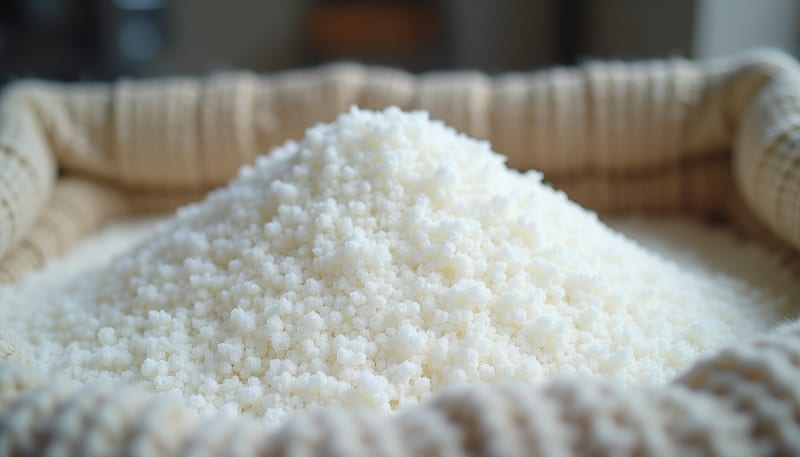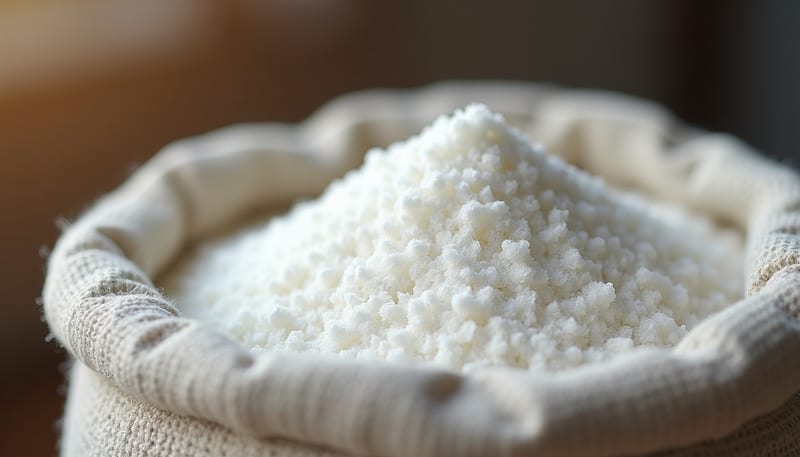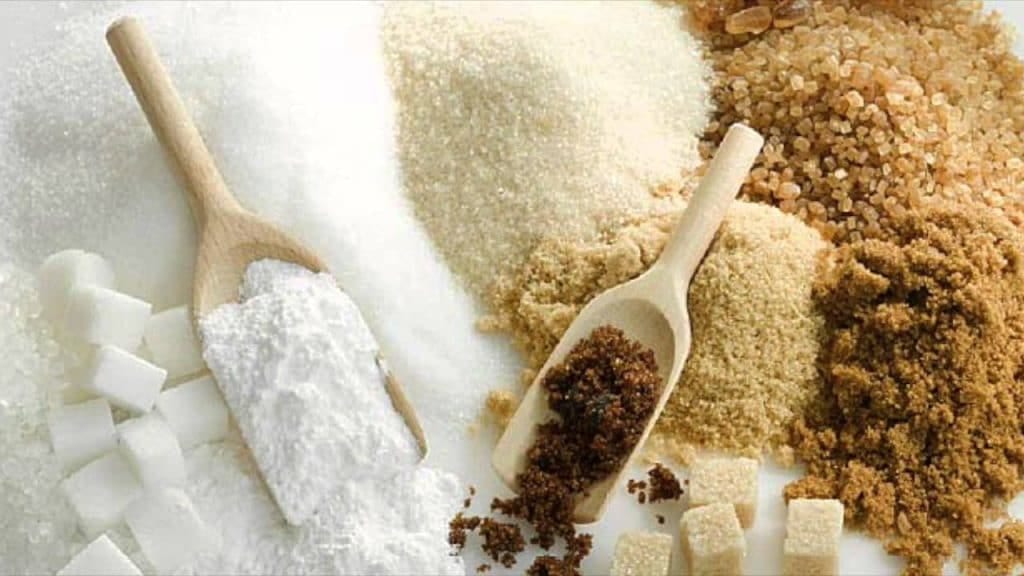
Sugar packaging for export is not a detail to leave to the last email before shipment. The bag size, the material, the liner, the loading pattern and the marks on each bag feed into the cost per tonne, the container count, the customs clearance and the shelf life at destination. Most packaging disputes start the same way: the buyer assumed the supplier would pack the sugar the way the buyer's market expects, and the supplier assumed the buyer would state what that meant. This page sets out the options, what each one costs in container space, and what to write into a purchase order so that the sugar bags that arrive are the ones the buyer needs.
Packaging is a function of the grade, the destination market, the end use and the logistics. Bulk granulated sugar moving between two refineries is a different packaging problem from refined white ICUMSA 45 going to a distributor in West Africa who will sell it in retail units. Both leave Santos in a container. The bags, the liner, the stow and the marks are different in every respect.
Why packaging belongs in the contract, not in an afterthought
Three things make packaging a contract term rather than an operational decision:
- Cost. A 50 kg polypropylene bag costs more per tonne than a 1,000 kg FIBC, and hand-stowing 500 bags into a container costs more in labour than loading 20 big bags with a forklift. The packaging line item is part of the FOB price.
- Compliance. The destination country's food-safety authority may require a specific liner, a specific print on the bag, or a certificate that the packaging material itself is food-grade. If that requirement is not in the contract, the supplier has no obligation to meet it and often no way to know what it is.
- Container utilisation. The number of metric tonnes that fit in a container depends on the bag size, whether bags are palletised, and the stacking pattern. A difference of two tonnes per container, multiplied across a programme of twenty containers, is forty tonnes of freight cost allocated differently.
Standard sugar bag sizes for export
The international sugar trade uses three packaging formats for containerised cargo. Bulk vessel shipment — sugar loaded loose into the hold — is a separate logistics category that does not use bags and is not covered here.
The three standard formats
| Format | Typical net weight | Material | How loaded | Typical use |
|---|---|---|---|---|
| Small bag | 25 kg | PP woven, PE inner liner | Hand-stowed loose, or palletised | Retail and wholesale distribution, markets where end users handle bags manually |
| Standard export bag | 50 kg | PP woven, PE inner liner | Hand-stowed loose, or palletised | The most common sugar bag size in the international trade; industrial end users, bakeries, beverage plants, repackers |
| FIBC / big bag / jumbo bag | 1,000 kg or 1,250 kg | Woven PP with PE inner liner, typically with top filling spout and four lifting loops | Loaded by forklift or crane | Refineries, large food manufacturers, any buyer with mechanical handling at destination |
A 50 kg bag is the standard in the Brazilian export trade and the default when a contract says "bagged" without stating the weight. The 25 kg format is common in African and Middle Eastern retail markets. Both are polypropylene woven bags with a polyethylene inner liner.
The FIBC — formally a Flexible Intermediate Bulk Container, commonly called a big bag, jumbo bag or super sack — is a single-use or limited-reuse fabric container. For sugar, the standard FIBC holds 1,000 kg or 1,250 kg. The 1,250 kg size is the most common for Brazilian sugar exports in FIBCs because twenty bags of 1,250 kg fill a 20-foot container to 25 metric tonnes, which is close to the maximum payload.
Sugar bag sizes outside these three standards do exist: 1 kg and 2 kg retail packs, 10 kg bags, 100 lb (45.36 kg) bags for markets that use imperial units. These are destination-market formats, usually packed by a repacker at destination, not at origin. A non-standard size packed at origin is a custom order and must be specified early enough for the packing line to be set up.
Packaging materials and food-grade requirements
Polypropylene woven bags
The outer bag for both 25 kg and 50 kg sugar bags is woven polypropylene (PP). PP woven fabric is strong enough to be stacked ten or twelve bags high in a container, resists tearing during handling, and is the accepted standard in every major importing market. For sugar export the industry norm is a fabric weight of 70 to 90 g/m2.
Polyethylene inner liner
The PE liner is the moisture barrier. Sugar is hygroscopic — it absorbs moisture from the air — and without a liner the sugar will cake, discolour and lose its free-flowing character. A standard PE liner for a 50 kg sugar bag is 60 to 80 microns (0.06 to 0.08 mm) thick. For FIBC bags carrying 1,000 kg or more, the liner is heavier, typically 100 to 120 microns, and is fitted as a separate bag inside the FIBC shell.
Food-grade certification
The PE liner must be manufactured from food-grade polyethylene in compliance with the destination market's food-contact regulations. The two frameworks that cover most of the trade are:
- EU Regulation (EC) No 1935/2004 and Regulation (EU) No 10/2011 for plastic food-contact materials, which apply to EU imports and to many markets that adopt EU standards.
- FDA 21 CFR 177.1520, which covers olefin polymers including polyethylene for food contact, applicable to the United States.
The buyer should state which food-contact regulation applies. The supplier's packaging vendor supplies a declaration of compliance, which travels with the shipping documents. Do not assume a food-grade declaration will be provided unless the contract asks for one.
Container loading: how bags fit into 20-foot and 40-foot boxes
Sugar is a dense cargo. A standard 20-foot dry container has an internal volume of roughly 33 cubic metres but a maximum payload of about 21.7 to 28 metric tonnes depending on the tare weight of the specific box. Sugar in bags fills the weight limit well before it fills the volume, so the loading pattern is driven by weight, not space.
Loading patterns by container and bag type
| Container | Bag format | Bags per container | Net weight (MT) | Loading method | Notes |
|---|---|---|---|---|---|
| 20-foot | 50 kg PP bags, loose | 500 | 25.0 | Hand-stowed, floor-loaded | The standard Brazilian export configuration; bags stacked in interlocking layers |
| 20-foot | 50 kg PP bags, palletised | 400–440 | 20.0–22.0 | Forklift | Pallet weight and dimensions reduce total bag count; faster to unload |
| 20-foot | 25 kg PP bags, loose | 1,000 | 25.0 | Hand-stowed | Same total weight, double the bag count, higher labour cost both ends |
| 20-foot | FIBC 1,000 kg | 20 | 20.0 | Forklift or crane | Lower MT per container than 50 kg bags; offset by lower packing and handling cost |
| 20-foot | FIBC 1,250 kg | 20 | 25.0 | Forklift or crane | The most efficient FIBC loading for a 20-foot box |
| 40-foot | 50 kg PP bags, loose | 540 | 27.0 | Hand-stowed | 40-foot containers are less common for bagged sugar; weight limit is the constraint |
| 40-foot | FIBC 1,250 kg | 20–21 | 25.0–26.25 | Forklift | Length allows more bags in theory; payload cap is the binding limit |
A few points that catch people:
- The 40-foot container does not double the tonnage of a 20-foot. Sugar is too heavy. A 40-foot standard container holds only 2 to 3 MT more than a 20-foot for bagged sugar, because the weight ceiling, not the floor area, is the binding constraint. This is why the 20-foot container is the standard unit in the sugar trade.
- Palletising costs tonnage. Each standard pallet (EUR 1200 x 800 mm or ISO 1000 x 1200 mm) weighs 20 to 25 kg and takes up floor space that loose bags would occupy. A palletised 20-foot container typically loads 20 to 22 MT versus 25 MT hand-stowed. The trade-off is unloading speed: a palletised container can be stripped in 30 minutes with a forklift; a hand-stowed container can take two hours.
- Container condition matters. The container must be clean, dry, free of odour and free of previous cargo residue. Sugar absorbs odours. Inspection reports — typically a container cleanliness certificate — are standard for CIF and CFR shipments and should be specified for FOB shipments where the buyer arranges the container.
Labelling requirements for export sugar bags
Every sugar bag shipped for export should carry the following marks, printed or stencilled on the outer PP bag:
- Product name and grade — e.g. "Refined White Cane Sugar ICUMSA 45". The ICUMSA colour scale is the internationally recognised grading system and should be stated on the bag.
- Net weight — "NET 50 KG" or "NET 1,000 KG". Gross weight is also printed where the destination requires it.
- Country of origin — "PRODUCT OF BRAZIL" or "ORIGIN: BRAZIL".
- HS code — the six-digit Harmonised System subheading. For refined white sugar this is 1701.99; for raw cane sugar it is 1701.14. Stating the HS code on the bag is a requirement in many markets and good practice in all of them.
- Lot or batch number — traceable to the certificate of analysis for that production lot.
- Production or packing date — and in some markets, a best-before date.
- Storage instructions — "Store in a cool, dry place" or the equivalent in the language of the destination market.
- Shipper's marks — contract number, consignee reference, port of destination. These are the marks that appear on the bill of lading and the packing list, and they must match.
Labelling in the language of the destination market is a regulatory requirement in many countries, not a courtesy. The buyer must state the language and any market-specific mandatory text — Arabic-language marking for Gulf Cooperation Council markets, for example — in time for the bags to be printed before packing begins. For FIBC bags the same information appears on a sewn or printed label, alongside the manufacturer's SWL (safe working load) rating.
Moisture protection, storage and shelf life
Refined white sugar — the grades from ICUMSA 35 through ICUMSA 150 — has a moisture content at packing of 0.04 to 0.06 percent by weight. At that moisture level and with an intact PE liner, bagged sugar has a shelf life of 24 months from the date of packing when stored under proper conditions.
Proper conditions means:
- Temperature below 30 degrees Celsius. Sugar does not spoil in the biological sense, but heat accelerates caking and yellowing of refined white sugar.
- Relative humidity below 65 percent in the storage environment. The PE liner protects the sugar from ambient moisture, but a torn or punctured liner exposes the sugar to the warehouse atmosphere.
- No direct sunlight, which degrades both the PP bag and the sugar colour.
- Ventilated warehouse, with bags stacked on pallets or dunnage, not directly on a concrete floor where condensation can form.
The moisture risk in the supply chain is not at the warehouse in Santos. It is inside the container in transit. Container rain — condensation that forms on the ceiling and walls of a shipping container when the container passes through a temperature differential — is the most common cause of moisture damage to bagged sugar. Mitigation measures include:
- Using container desiccant strips (calcium chloride absorbers) hung inside the container.
- Lining the inside of the container walls and ceiling with kraft paper or a container liner before loading.
- Ensuring the container is loaded in dry conditions and the doors are sealed before rain or high humidity.
These measures should be specified in the contract, particularly for long-haul voyages that cross climate zones. The cost is modest — a few dollars per container for desiccant — and the alternative is a moisture claim on arrival.
Raw cane sugar and VHP has higher moisture at packing (typically 0.10 to 0.15 percent) and is more tolerant of ambient conditions. It is rarely shipped in 50 kg bags; the standard packaging for raw sugar in containers is the FIBC, and for large volumes raw sugar moves in bulk vessels.
How to specify packaging on a purchase order
A complete packaging specification in a sugar purchase order should state:
- Bag size and format — 50 kg PP bags with PE liner, or FIBC 1,250 kg with PE liner, or whatever the buyer requires.
- Palletised or loose — and if palletised, the pallet type (EUR, ISO, or a market-specific format) and whether the pallets are heat-treated and ISPM 15 stamped, which is a phytosanitary requirement for wood packaging in most countries.
- Bag printing — the marks listed in the labelling section above, including the language, the specific text, and any logos or graphics the buyer requires on the bag. Custom-printed bags add lead time: typically two to three weeks for bag production before packing can begin.
- Food-grade declaration — which regulation the packaging compliance certificate should reference (EU, FDA, or the destination market's own framework).
- Container protection — whether desiccant and/or a container liner are required.
- Loading pattern — hand-stowed or palletised, and the target net weight per container.
If none of this is stated, the default for Brazilian sugar exports is: 50 kg white PP woven bags with PE inner liner, hand-stowed loose in 20-foot containers, 500 bags per container, 25 MT net, standard shipper's marks, no palletisation, no container liner. That default covers most of the trade, but if the buyer's market or end use requires anything different, the contract is where it belongs.
Send us the specification — grade, tonnage, packaging format and destination — and the quotation will include the packaging as a confirmed line item, not an assumption.
Packaging information last reviewed 26 October 2026.
Sources
-
EU Regulation (EC) No 1935/2004 and Regulation (EU) No 10/2011 — the food-contact framework for plastic materials and articles, including PE liners, applicable to sugar imported into the European Union.
-
FDA 21 CFR 177.1520 — the U.S. regulation covering olefin polymers, including polyethylene, for use in food-contact applications.
-
FIBC Safe Use Guidelines, European FIBC Association (EFIBCA) — industry guidance on safe working loads, filling, handling and storage of FIBCs, including food-grade requirements.
-
ISPM 15 (International Standards for Phytosanitary Measures No. 15) — the FAO standard for wood packaging material in international trade, applicable to pallets and dunnage.
-
Container loading figures are based on the internal dimensions and maximum payload of standard ISO 6346 dry freight containers. Actual payload varies by container tare weight and shipping line policy; the figures in this page are representative, not guaranteed for a specific box.
Where this page states a packaging default for Brazilian sugar exports, that default reflects current trade practice from the port of Santos. Packaging for a specific order is confirmed on quotation.