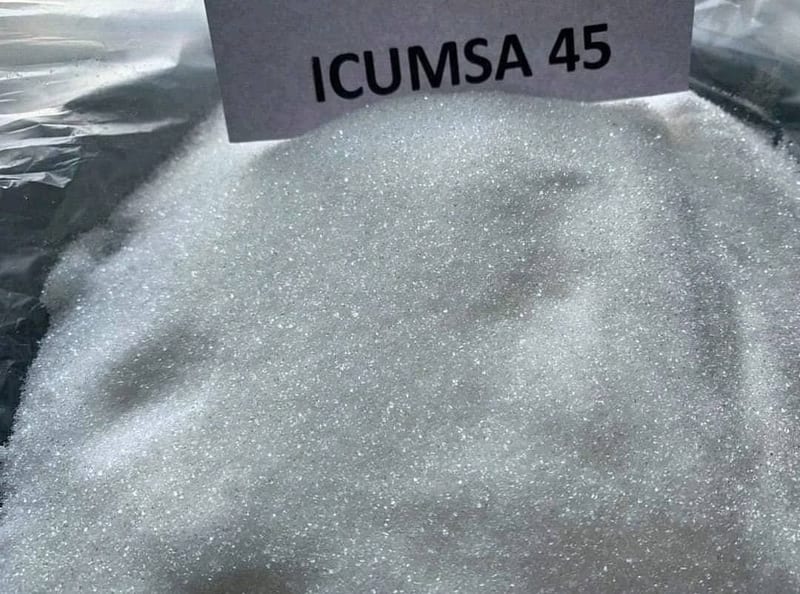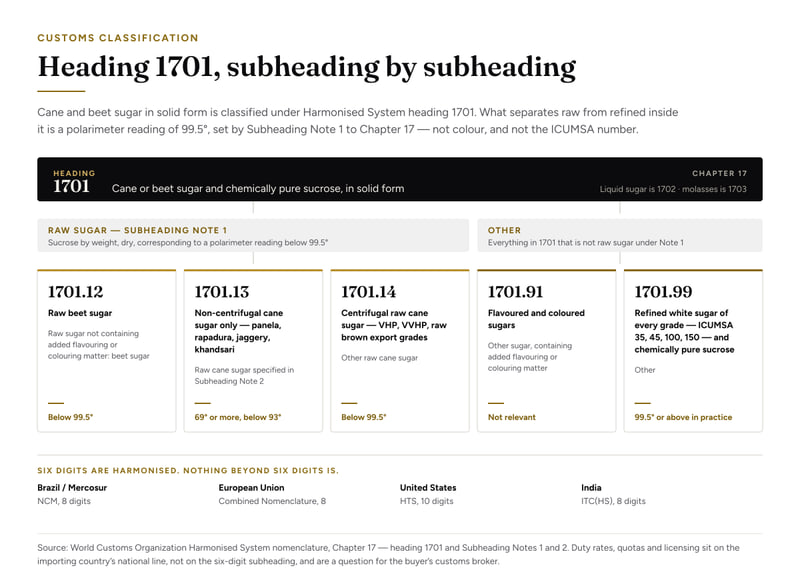
For sugar shipped by sea, three Incoterms do almost all the work: FOB (Free On Board), CFR (Cost and Freight) and CIF (Cost, Insurance and Freight). Under all three the risk passes to the buyer when the sugar is loaded on board the vessel at the port of shipment, for Brazil usually Santos or Paranaguá. What changes is who books and pays the ship and who buys the insurance. This guide compares FOB, CFR and CIF for sugar, explains what each price includes, and shows how to put competing offers on the same basis.
Under FOB, CFR and CIF, the seller carries the risk until these bags are on board the ship
FOB vs CFR vs CIF for sugar
| FOB Santos | CFR (your port) | CIF (your port) | |
|---|---|---|---|
| Seller pays for | Sugar, packing, inland freight, port and loading costs, export clearance | Everything in FOB plus ocean freight | Everything in CFR plus marine insurance |
| Buyer pays for | Ocean freight, insurance, import clearance, duties, destination port costs | Insurance, import clearance, duties, destination costs | Import clearance, duties, destination costs |
| Who books the vessel or containers | Buyer | Seller | Seller |
| Risk passes to buyer | When sugar is on board at the Brazilian port | Same: on board at the Brazilian port | Same: on board at the Brazilian port |
| Insurance | Buyer arranges | Buyer arranges | Seller arranges, at least ICC (C) cover for 110% of the value |
| Suits | Buyers with their own freight contracts or charter vessels | Buyers who want a delivered price but insure under their own policy | Buyers who want one landed-cost figure to the port |
These are the 2020 edition rules (Incoterms® 2020), published by the International Chamber of Commerce. Always write the edition into the contract, for example "CIF Lagos, Incoterms 2020".
FOB: Free On Board
Under FOB Santos, the seller delivers the sugar loaded on board the vessel the buyer has nominated. The seller's price covers the sugar, packaging, inland transport to the port, terminal handling and loading, and Brazilian export clearance. From the moment the sugar is on board, freight, insurance and risk belong to the buyer.
FOB is the reference basis for Brazilian sugar, and it is how bulk raw sugar is usually sold: the buyer, often a refinery or trading house, charters the vessel. For bulk cargoes the contract must also cover the loading rate, laytime and demurrage, which decide who pays demurrage if the ship waits. The Santos and Paranaguá guide explains line-ups and loading.
CFR: Cost and Freight
Under CFR, the seller also books and pays for the sea freight to the named destination port. The risk still passes when the sugar is loaded in Brazil, so if it is damaged at sea the buyer claims on its own insurance. CFR is popular with container buyers who insure goods under an annual cargo policy.
CIF: Cost, Insurance and Freight
CIF adds marine insurance, bought by the seller for the buyer's benefit. Incoterms 2020 only requires the minimum cover, Institute Cargo Clauses (C), for 110% of the contract value. If you want broader "all risks" cover, ICC (A), write it into the contract and the letter of credit.
CIF is convenient because it gives one price to your port, but remember that the seller chooses the shipping line and the insurer. Many experienced importers prefer CFR and insure themselves.
CIF vs FOB: what is the difference in practice?
- Price: CIF = FOB + ocean freight + insurance. The sugar itself costs the same.
- Control: under FOB you choose the carrier, route and timing; under CIF the seller does.
- Risk: identical. In both, risk transfers at loading in Brazil, not on arrival.
- Documents: a CIF seller must also hand over an insurance policy or certificate.
A common misunderstanding is that CIF means the seller is responsible until the sugar reaches your port. It does not. If you need the seller to carry the risk to your port, the term is DAP or DDP, which are rarely used for bulk sugar.
What about FCA for containers?
The ICC recommends FCA (Free Carrier) rather than FOB for containerised goods, because a container is handed over at the terminal, not loaded over the ship's rail by the seller. In the sugar trade FOB, CFR and CIF remain the norm for containers too, and banks and buyers expect them. If you use FOB for containers, agree in the contract exactly when the container counts as delivered.
Comparing sugar offers on the same basis
Offers arrive on different terms. To compare them:
- Convert everything to a delivered cost at your port: FOB + freight + insurance.
- Check packaging: 50 kg bags, jumbo bags or bulk change both price and freight. See sugar packaging for export.
- Check the shipment period and validity of the offer.
- Check what inspection is included, and who pays for it. See sugar inspection and certificates.
- Add your own duties, port charges and inland costs, which no Incoterm above covers.
The price build-up is explained further in ICUMSA 45 sugar price per ton.
Incoterms and the letter of credit
The documents in a letter of credit must fit the Incoterm. A CIF credit should call for an insurance certificate; an FOB credit should not. A CFR or CIF credit usually requires a "freight prepaid" bill of lading; an FOB credit a "freight collect" one. Mismatches cause discrepancies and payment delays. See SBLC vs letter of credit.
Which Incoterms we offer
We quote FOB Santos or Paranaguá, CFR and CIF under Incoterms 2020, in containers or, for larger raw cargoes, in bulk. Tell us the grade, tonnage, destination port and preferred Incoterm, and we will quote on that basis. Request a quotation.
Frequently asked questions
What does FOB mean in sugar trade? Free On Board: the seller delivers the sugar loaded on the buyer's nominated vessel at the port of shipment; freight, insurance and risk then pass to the buyer.
What does CIF mean? Cost, Insurance and Freight: the seller pays for the sugar, sea freight and minimum insurance to the named port, but the risk passes to the buyer once the sugar is loaded.
Is CIF or FOB better for a sugar buyer? FOB gives you control of freight and timing; CIF is simpler if you lack freight contracts. Risk is the same under both.
When does risk pass under CIF? When the sugar is on board the vessel at the port of shipment, not when it arrives.
What insurance does CIF include? At least Institute Cargo Clauses (C) cover for 110% of the contract value, unless the contract requires more.
What is FOB Santos? The standard price basis for Brazilian sugar: sugar delivered on board the buyer's vessel at the Port of Santos.