A wholesale sugar price is built in layers: a world futures benchmark, a premium for the grade, the cost of bagging, freight and insurance to your port, import duty, and the distributor's margin. That is why the same ICUMSA 45 sugar can be quoted at very different "bulk sugar prices" by different sellers on the same day, and why a price per 50 kg bag in your local market can be far above the price per tonne you see on a futures screen. This guide breaks down each layer so you can compare offers and work out a landed price.
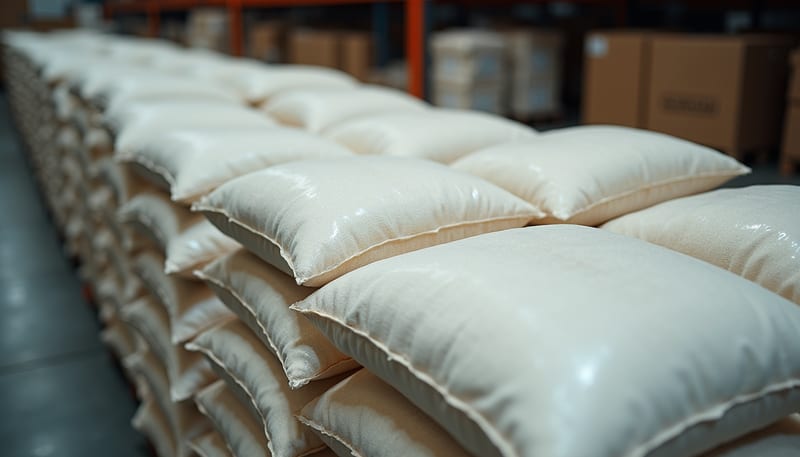
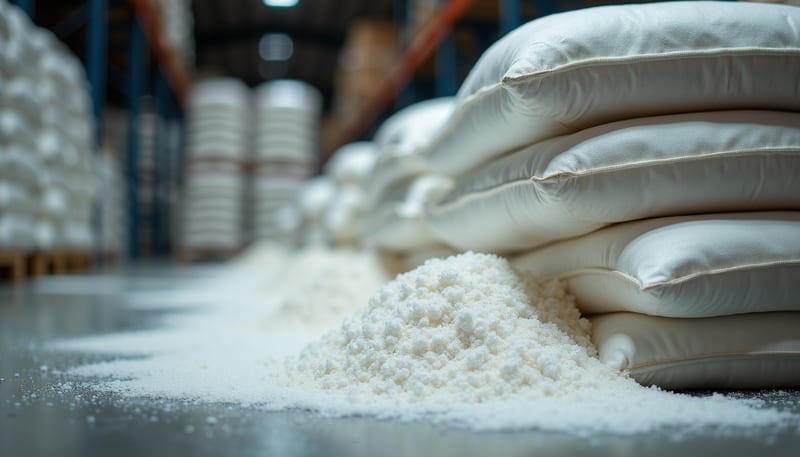
Bagged sugar in a warehouse: by the time it reaches a wholesaler, freight, duty and handling have been added to the origin price
The five layers of a bulk sugar price
| Layer | What it is | Who sets it |
|---|---|---|
| 1. Benchmark | ICE No. 11 for raw sugar, ICE London No. 5 for refined white | The futures market, every trading day |
| 2. Grade premium | Extra (or discount) for the ICUMSA grade, polarisation and specification | Physical market and the seller |
| 3. Packaging | Bulk, 1 MT jumbo bags or 50 kg bags | The seller's costs at origin |
| 4. Delivery | Inland freight, port charges, ocean freight and insurance (CFR/CIF) | Shipping lines and the seller |
| 5. Import and distribution | Duty, port clearance, inland transport, storage, finance and margin | Your government and your local supply chain |
A price "FOB Santos" covers layers 1 to 3 plus delivery onto the ship in Brazil. A price "CIF your port" covers layers 1 to 4. A wholesale price in your own market covers all five.
Layer 1: the world benchmark
All bulk sugar is priced off one of two futures contracts:
- Raw sugar off ICE Sugar No. 11, quoted in US cents per pound. Multiply by 22.046 to get US dollars per tonne.
- Refined white sugar off ICE London No. 5, quoted in US dollars per tonne.
How to read both, and the white premium between them, is explained in sugar price today.
Layer 2: the grade premium
The benchmark sets the level; the grade sets the premium on top.
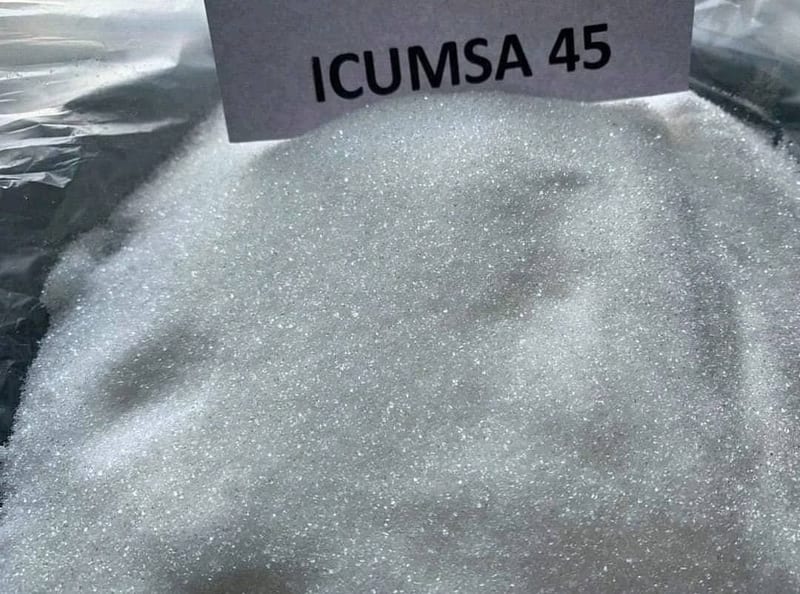
- ICUMSA 45 trades close to the London No. 5 price, because No. 5 is itself a 45 ICUMSA contract.
- ICUMSA 35 carries an extra premium for lower colour.
- ICUMSA 100 and white crystal sugar usually price below ICUMSA 45 and above raw sugar.
- Raw VHP and ICUMSA 600–1200 trade off No. 11, with an adjustment for polarisation.
- Beverage-grade sugar adds the cost of extra testing to the ICUMSA 45 price.
The full grade chart is on the ICUMSA sugar grades page.
Layer 3: packaging
Packaging is one of the biggest differences between a "bulk sugar price" and a "wholesale sugar price".
- Bulk in a vessel hold is the cheapest per tonne, but only practical for refineries and large importers with silo discharge.
- 1 MT jumbo bags (FIBC) cost more than bulk but are easy for factories to handle.
- 50 kg woven polypropylene bags, often with a liner, are the most expensive per tonne to fill and load, but are what distributors and repackers need.
Bag sizes, container loads and liners are covered in detail in sugar packaging for export.
Layer 4: freight and insurance
From Brazil, the main delivery choices are:
- FOB Santos or Paranaguá: you arrange and pay the ocean freight.
- CFR: the seller pays freight to your port.
- CIF: the seller pays freight and minimum insurance.
Ocean freight changes with fuel prices, container availability and the route. For distant destinations it can add more to the price than the difference between two origins. Always compare offers on the same Incoterm; our guide to the ports of Santos and Paranaguá explains what happens at loading.
Layer 5: duty, clearance and distribution
This is the layer most often missing from online price comparisons, and in many markets it is the largest.
- Import duty. Many countries protect their own sugar industries. Duties range from zero under some trade agreements to high specific or ad valorem rates elsewhere, sometimes with quotas.
- Port and clearance costs. Terminal handling, customs brokerage, inspection and any required legalisation of documents.
- Inland logistics and storage to the wholesaler's warehouse.
- Finance. The cost of a letter of credit and of holding stock.
- Margin for the importer, wholesaler and retailer.
Our guide to importing sugar explains how to find your duty rate and the documents customs will ask for.
How to convert a price per tonne into a price per 50 kg bag
There are 20 bags of 50 kg in a tonne, so:
Price per 50 kg bag = price per tonne ÷ 20
Price per kg = price per tonne ÷ 1,000
Apply the formulas to the landed price, not the FOB price, if you want to compare with a local "50 kg sugar price". An FOB offer leaves out freight, duty and distribution, which in many markets add more than the grade premium.
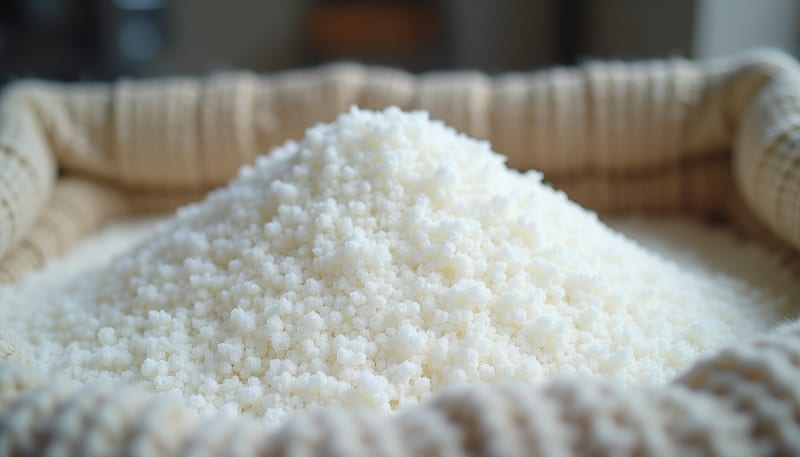
A 50 kg sack is the unit most wholesale markets quote; there are 20 in a metric tonne
Why wholesale sugar prices differ so much between sellers
- Different layers. One seller quotes FOB, another CIF, another delivered to your warehouse.
- Different grades. "White sugar" can mean ICUMSA 45, 100 or 150.
- Different validity. A price struck yesterday may not stand today, because the benchmark moved.
- Different volumes. A single container and an annual programme are priced differently.
- Prices that are too good. An ICUMSA 45 offer well below London No. 5, especially one that asks for a fee before any documents are issued, is a typical scam. See how to find reliable sugar suppliers in Brazil.
How to get the best bulk sugar price
- Specify the grade you actually need. Buying ICUMSA 45 when ICUMSA 100 would do is a common avoidable cost.
- Choose packaging to match your handling. Jumbo bags cost less per tonne than 50 kg bags if your site can handle them.
- Fill the container. Freight is charged per box; a full 20 ft container of bagged sugar holds about 25 tonnes.
- Buy during the crush. Brazilian supply is most plentiful between April and November; see the harvest calendar.
- Consider a programme. Regular monthly shipments give the seller certainty, which can improve terms.
- Compare landed cost, not headline price.
What to send for a wholesale sugar quotation
- Grade (ICUMSA number) and any specification limits
- Tonnage per shipment and per year
- Packaging: 50 kg, 1 MT jumbo or bulk
- Destination port and Incoterm
- Required shipment month
Send these to us and we will quote against the market on the day, with the price basis and validity stated. For the wider buying process, see bulk sugar suppliers: how to buy wholesale sugar.
Frequently asked questions
What is the wholesale price of sugar? It depends on the grade, packaging, delivery point and import duty. Start from the London No. 5 price for refined white or the No. 11 price for raw sugar, then add the grade premium, packaging, freight and import costs.
What is the price of a 50 kg bag of sugar? Divide the price per tonne by 20. Local 50 kg prices include duty, transport and margins, so they are usually well above the FOB export price.
Why is bulk sugar cheaper than bagged sugar? Because filling, bagging and handling cost money. Bulk cargo avoids bags and is loaded mechanically.
Is it cheaper to buy sugar directly from Brazil? It can be, for buyers who take at least a container and can handle import procedures. Smaller buyers often pay less overall buying from a local importer who already carries the freight and duty.
How often do wholesale sugar prices change? The benchmark changes every trading day. Physical offers are usually firm only for a short stated period.