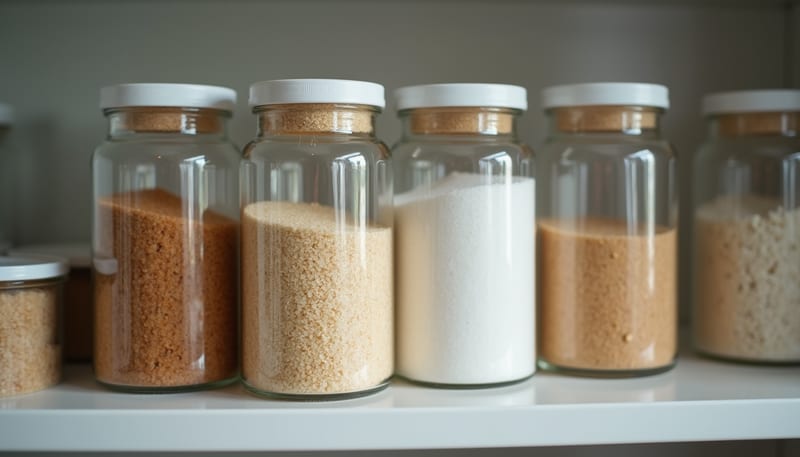
Sugar does not spoil in the way most foods do, because its very low water activity stops microbes growing. What damages stored sugar is moisture: damp air makes it cake into lumps, wet raw sugar can ferment and lose sucrose, and refined sugar picks up odours and colour. Stored dry, cool and clean, refined white sugar keeps its quality for about two years and raw sugar for about 18 months. This guide explains the conditions bulk and bagged sugar need, the moisture rules buyers should know, and how to receive and store an export shipment.
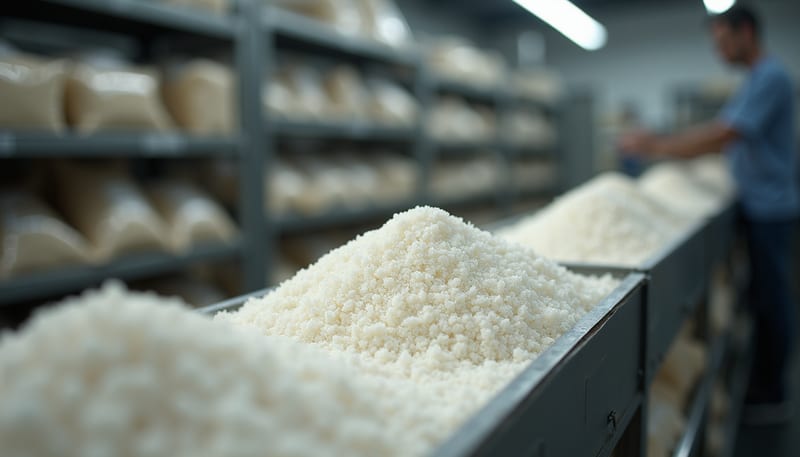
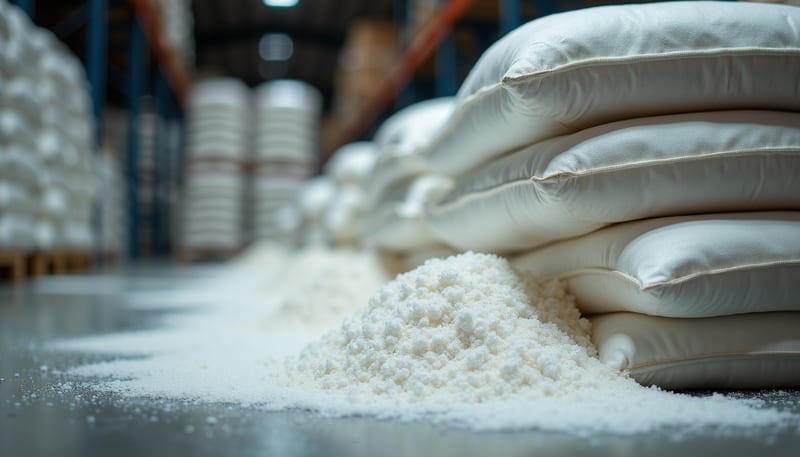
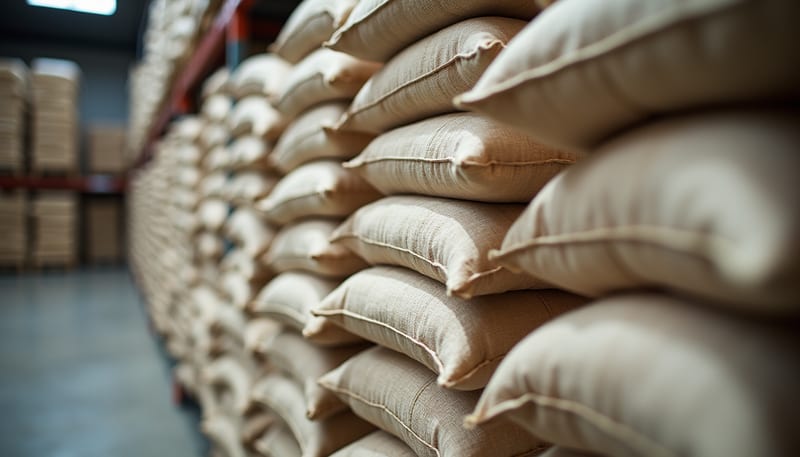
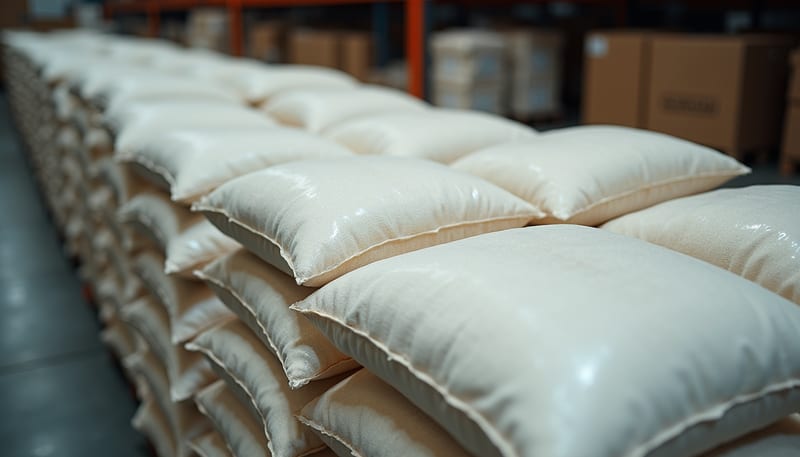
Dry, ventilated warehouses with sugar on pallets are the basis of good sugar storage
Sugar shelf life by grade
| Grade | Typical best-before for quality | Main risk in storage |
|---|---|---|
| Refined white, ICUMSA 45 and 35 | About 24 months | Caking, odour pick-up, slight yellowing |
| Mill white, ICUMSA 100–150 | About 18–24 months | Caking, colour increase |
| Raw cane sugar, ICUMSA 600–1,200 | About 18 months | Moisture uptake, microbial deterioration, sucrose loss |
| Soft brown and speciality sugars | Shorter; hardens as it dries | Drying out and hardening |
"Best before" here means the period over which the sugar stays within its specification and flows freely under good storage. Sugar that has caked is not unsafe, but it may be out of specification and hard to handle.
Why moisture is the enemy
Sugar is hygroscopic: it absorbs water from the air when the relative humidity is high, and releases it when the air is dry. Each swing leaves a film of syrup that dries into crystal bridges between grains. Repeat that a few times and a free-flowing sack becomes a solid block.
Practical limits buyers use:
- Relative humidity: keep the store's air at roughly 60–65% RH or below for refined sugar. Above that, caking risk rises quickly.
- Temperature: keep it steady. Day-night swings drive moisture migration inside bags and containers.
- Moisture at delivery: refined ICUMSA 45 is specified at 0.04% moisture or less; raw sugar at a higher limit stated in the contract.
The safety factor for raw sugar
For raw sugar the trade uses a safety factor: moisture divided by (100 minus polarisation). A safety factor of 0.25 or below is generally considered safe for storage; above that, yeasts and moulds can grow and convert sucrose to invert sugar, lowering polarisation over time. The VHP sugar guide explains polarisation.
How to store bagged sugar
- Dry, clean, closed warehouse with a sound roof, no leaks and good ventilation.
- Pallets, never on the floor, and space from walls, about half a metre, so air can circulate and inspections are possible.
- Stack height limited so bottom bags are not crushed and caked by pressure.
- Away from odours: no fuels, chemicals, fertiliser, spices or fish in the same store.
- First in, first out. Mark arrival dates and use the oldest stock first.
- Pest control: sealed doors, bait stations outside the stacks, regular inspection.
- Keep bags closed until use; reseal opened bags.
50 kg woven polypropylene bags with a polyethylene inner liner give good moisture protection; see sugar packaging for export for bag and container options.
How to store bulk sugar
- Raw sugar is stored in large covered sheds at ports and refineries, piled on dry concrete floors, with doors closed in wet weather. Bulk loading in Brazil stops during rain for the same reason; see Brazil's sugar ports.
- Refined sugar in bulk is held in silos with conditioning air, dehumidified and temperature-controlled, so the sugar stays free-flowing.
Container sweat: the transit risk
On long voyages, especially from Brazil to hot, humid destinations, the air inside a container cools at night and warms by day. Moisture condenses on the roof and walls and drips onto the bags: container rain. To reduce it:
- load sugar that is fully conditioned and cool;
- use desiccant bags or strips and kraft paper lining on walls and roof;
- avoid leaving containers in direct sun at the destination port;
- unstuff promptly and move the sugar into a dry store.
Receiving an export sugar shipment
- Check the seals against the bill of lading before opening.
- Inspect the bags: wet patches, tears, caking, stains, odours. Photograph anything unusual.
- Sample and test if quality is in doubt, and note issues on the delivery receipt.
- Notify the insurer and the seller promptly if there is damage. Under FOB, CFR and CIF the risk passed at loading, so transit damage is a cargo insurance matter. See Incoterms for sugar.
Frequently asked questions
Does sugar expire? Sugar does not support microbial growth when dry, so it does not spoil like most foods, but it can cake, absorb odours or lose quality. Refined white sugar is usually given a best-before of about two years.
What is the shelf life of white sugar? About 24 months for refined white sugar kept dry, cool and sealed.
What humidity is best for storing sugar? Below about 60–65% relative humidity, at a steady temperature.
Why does sugar get hard? Because it absorbs moisture in humid air and then dries, forming crystal bridges between grains.
How should sugar bags be stored? On pallets, away from walls and odours, in a dry, ventilated warehouse, used first in, first out.
What is the sugar safety factor? A storage-risk measure for raw sugar: moisture ÷ (100 − polarisation). Values of 0.25 or below are generally considered safe.