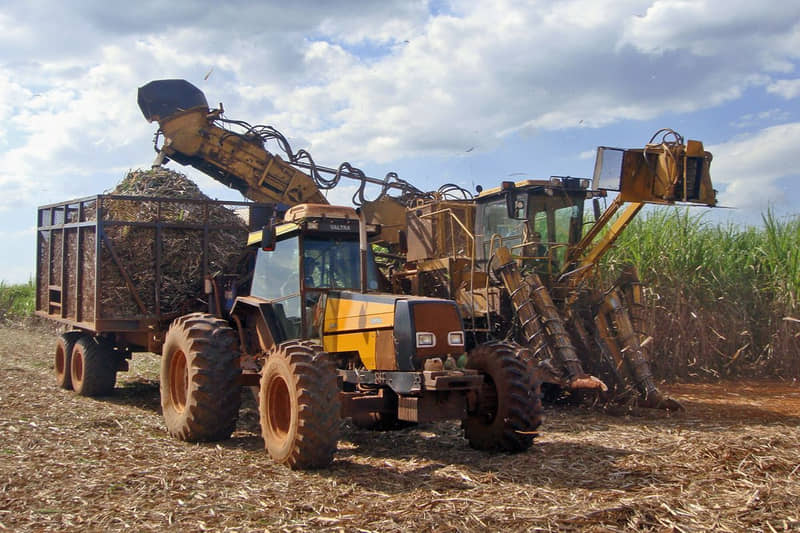
Demerara and muscovado are both brown cane sugars, but they are made differently and behave differently. Demerara is a lightly processed sugar with large, dry, golden crystals and a mild toffee flavour; most of its molasses has been spun off. Muscovado is an unrefined or minimally refined sugar that keeps almost all of its molasses, so it is dark, fine, moist and strongly flavoured. Use demerara where you want crunch and a gentle caramel note, and muscovado where you want deep flavour and moisture.
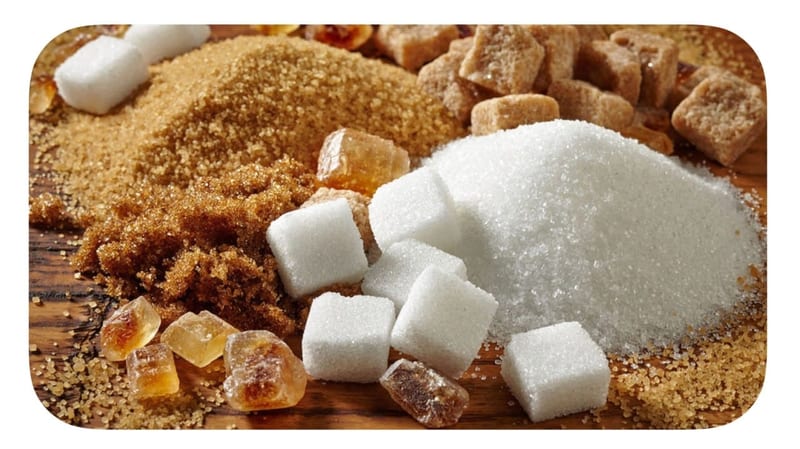
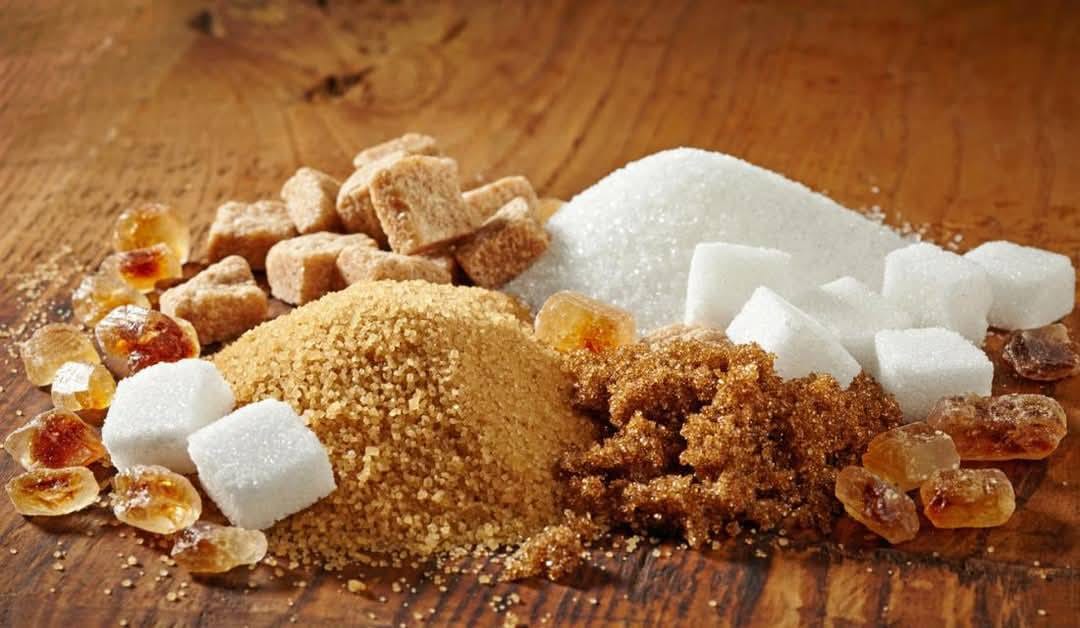
From left to right in the trade: refined white, demerara-type golden crystals and dark, molasses-rich sugar
Demerara vs muscovado at a glance
| Demerara | Muscovado | |
|---|---|---|
| Source | Sugarcane | Sugarcane |
| Processing | Juice crystallised, then centrifuged so most molasses is removed; a thin film stays on the crystal | Juice boiled until it crystallises; little or no molasses removed |
| Molasses content | Low | High |
| Crystal | Large, hard, crunchy | Fine, soft, sticky |
| Colour | Pale gold to amber | Dark brown (light muscovado is also made) |
| Moisture | Dry, free-flowing | Moist, clumps easily |
| Flavour | Mild caramel, honey | Strong molasses, liquorice, toffee |
| Best uses | Coffee, crumble toppings, crunchy biscuits, cake tops | Gingerbread, fruit cake, barbecue sauces, toffee, chocolate baking |
| Also called | Raw cane sugar (retail), similar to turbinado | Barbados sugar, moist sugar |
What is demerara sugar?
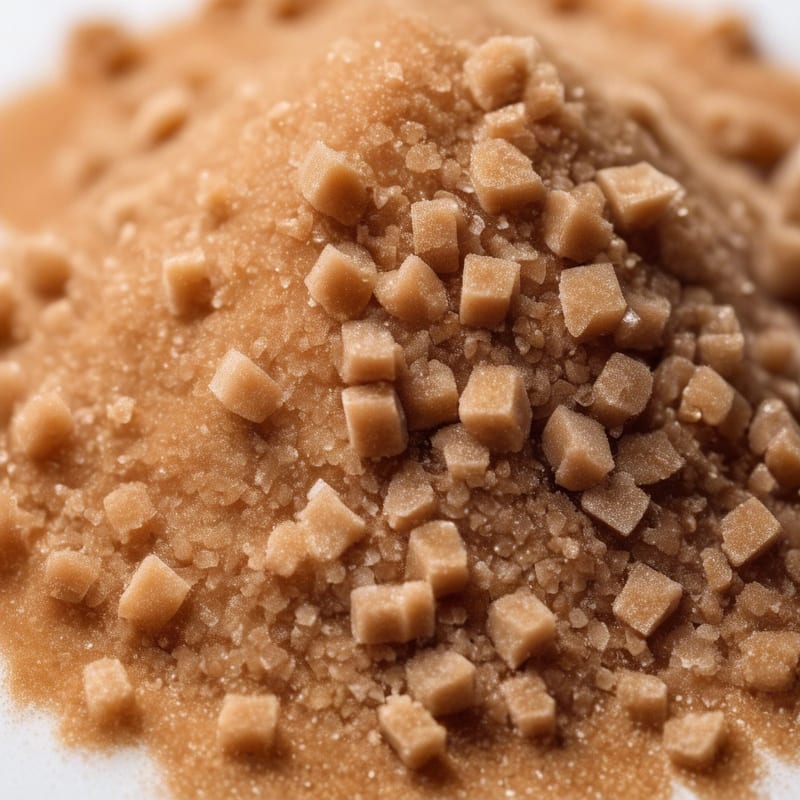
Demerara sugar takes its name from the Demerara region of Guyana, where it was first produced for export. It is made by crystallising cane juice into large crystals and then spinning them in a centrifuge to remove most of the molasses, leaving a thin, golden film. Some producers wash the crystals lightly.
Because the crystals are large and dry, demerara does not dissolve quickly. That makes it good for adding crunch on top of baked goods and for sweetening coffee, but less suitable for smooth cake batters or meringues.
Today demerara-style sugar is produced in several cane countries. Mauritius is known for speciality brown sugars including demerara, and Guyana still exports it. Many retailers also sell "demerara" made from raw sugar to the same visual standard.
Demerara sugar meaning, in one line: a light-brown cane sugar with large, crunchy crystals and a light coating of natural molasses.
What is muscovado sugar?
Muscovado is the least processed of the common brown sugars. Cane juice is boiled until it thickens and crystallises, and the result is dried without spinning off the molasses, or with only a little removed. The molasses stays in the sugar, so it is dark, moist and strongly flavoured.
Muscovado comes in light and dark versions. Dark muscovado has the most molasses and the strongest flavour. It is produced in countries including the Philippines, Mauritius, India and parts of Latin America, often by smaller mills.
Closely related, but not the same, are non-centrifugal sugars such as panela, rapadura and jaggery, which are made by boiling juice to a solid block or powder without any centrifuging. In customs terms these fall under HS 1701.13, while demerara and most muscovado sold internationally are centrifugal sugars; see the sugar HS code guide.
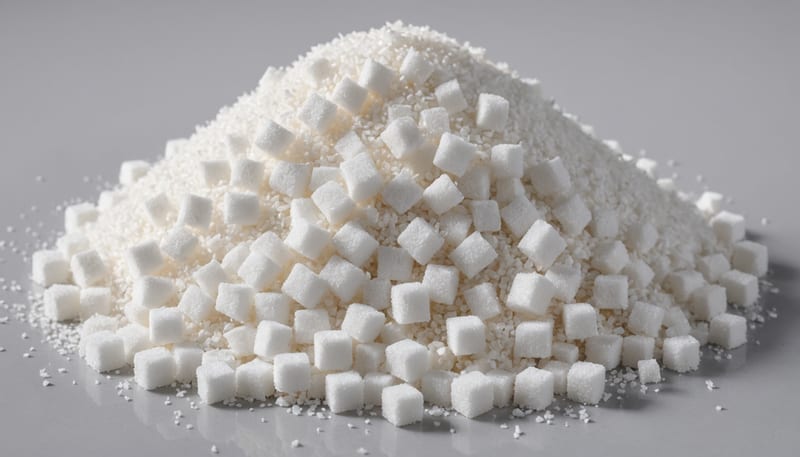
Refined white sugar has all the molasses removed; demerara keeps a little, muscovado keeps most
How they compare with other brown sugars
- Turbinado is close to demerara: raw cane sugar washed with steam in a turbine centrifuge, giving large pale-gold crystals. The two names are often used for similar products.
- Light and dark brown sugar (soft brown sugar) sold in most supermarkets is usually refined white sugar with molasses added back. It is moist like muscovado but has a milder, more uniform flavour.
- Raw cane sugar for refining, such as Brazilian VHP or ICUMSA 600–1200, is an industrial commodity. It looks golden-brown but is sold to refineries and factories by the container or shipload, not as a retail product.
Our overview of brown sugar producers, exporters and prices covers the bulk market.
Can you substitute demerara for muscovado?
Sometimes, with care:
- Muscovado for demerara: works for flavour in a batter, but you lose the crunch. Don't use muscovado as a crunchy topping.
- Demerara for muscovado: you lose moisture and depth of flavour. For a closer match, grind demerara finely and add a spoonful of molasses or treacle per 100 g.
- Soft dark brown sugar for muscovado: the nearest everyday substitute, with a milder flavour.
- Either for white sugar: possible in most baking, but expect a darker colour, more flavour and, with muscovado, a moister result.
Which one should you choose?
Choose demerara when texture matters: a crunchy topping on muffins or crumbles, a sparkling finish on biscuits, or a slow-dissolving sweetener for coffee. Choose muscovado when flavour and moisture matter: dark cakes, sticky toffee pudding, marinades, barbecue rubs and chocolate brownies, where its molasses adds depth and keeps the bake soft. For everyday baking where you only want a hint of colour, a light soft brown sugar is usually the cheapest option.
Is demerara or muscovado healthier?
Both are still mostly sucrose, with about the same calories as white sugar. Muscovado keeps more of the minerals in molasses, such as potassium, calcium and iron, but the amounts in a normal serving are small. Health advice on limiting free sugars applies to both.
Storage and handling
- Demerara is dry and stores like white sugar in a sealed container.
- Muscovado dries out and goes hard if exposed to air. Store it airtight. If it hardens, a slice of bread or apple in the container for a day softens it.
- In bulk, muscovado and soft brown sugars need lined bags and humidity-stable storage to stop caking.
Buying demerara or muscovado in bulk
Demerara and muscovado are speciality sugars. They are sold mainly by specialist producers and packers to retailers, bakeries and food brands, usually by the pallet or the container, at prices well above standard white sugar.
If you are buying for industrial use, you may not need a speciality sugar at all. Many food manufacturers who want a golden colour or mild caramel note use raw cane sugar instead, which is much cheaper per tonne. We supply raw brown cane sugar, ICUMSA 600–1200 and refined grades such as ICUMSA 45 from Brazil; we do not sell branded demerara or muscovado. Tell us your application and we will tell you whether a raw grade could work.
Frequently asked questions
What is the main difference between demerara and muscovado sugar? Demerara has large, dry crystals and only a little molasses; muscovado is fine, moist and keeps most of its molasses, so it tastes much stronger.
Is demerara sugar the same as brown sugar? It is one type of brown sugar. Supermarket "brown sugar" is usually soft brown sugar, which is moister and finer than demerara.
Is muscovado the same as dark brown sugar? They are similar in colour and moisture, but muscovado keeps its original molasses, while most dark brown sugar is refined sugar with molasses added back.
Is demerara sugar unrefined? It is lightly refined: most of the molasses is spun off, but it is not fully refined like white sugar.
Where does demerara sugar come from? It is named after the Demerara region of Guyana. Today it is made in several cane-growing countries, including Mauritius and Guyana.