Beet sugar and cane sugar are the same substance. Once refined, both are almost pure sucrose (99.7–99.9%) and cannot be told apart by taste, colour or behaviour in most recipes. The differences are in the plant, the place it grows, how it is processed, and what the unrefined and by-products taste like. For a buyer of bulk sugar, the practical differences are cost, origin, seasonality and a few specialist uses where cane sugar is preferred.
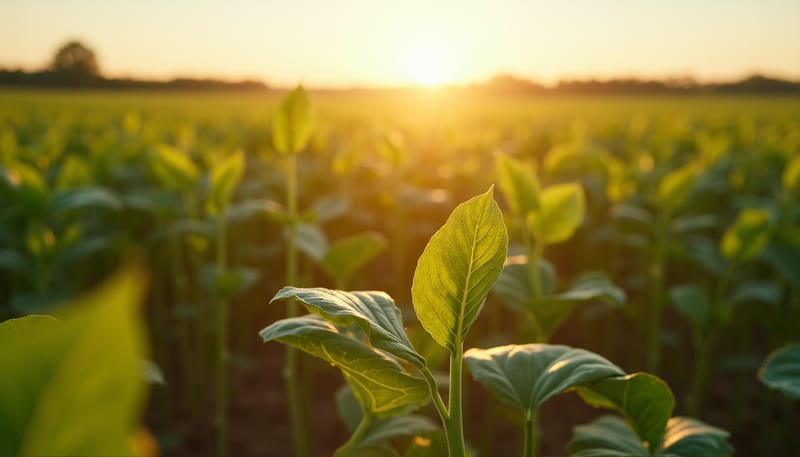
Sugar beet is a temperate root crop; its leaves grow in a low rosette above the root
Beet sugar vs cane sugar at a glance
| Cane sugar | Beet sugar | |
|---|---|---|
| Plant | Sugarcane, a tall tropical grass | Sugar beet, a white root related to beetroot and chard |
| Where it grows | Tropics and sub-tropics: Brazil, India, Thailand, China, Australia, Central America | Temperate zones: EU, Russia, Ukraine, USA, Turkey, Egypt |
| Part used | Stalk, crushed for its juice | Root, sliced and soaked in hot water |
| Crop cycle | Perennial: one planting gives several harvests | Annual: sown and lifted each year |
| Processing | Usually two steps: raw sugar at the mill, refined later | Usually one step: white sugar made directly at the factory |
| Raw by-product | Cane molasses, pleasant flavour; used for rum and brown sugar | Beet molasses, earthy flavour; used mostly for animal feed and fermentation |
| Refined product | Sucrose, at least 99.8% in ICUMSA 45 grade | Sucrose, typically 99.7% or more in EU white sugar grades |
| Share of world output | Roughly four-fifths | Roughly one-fifth |
Is beet sugar the same as cane sugar?
Chemically, yes. Refined white sugar from either crop is sucrose, a molecule made of one glucose and one fructose unit. The trace compounds that remain after refining are present in parts per million, and international standards such as the ICUMSA colour scale and the Codex Alimentarius standard for white sugar treat the two as the same product.
That is why the world white sugar benchmark, ICE London No. 5, accepts both beet and cane sugar for delivery, and why a food label in most countries can simply say "sugar".
How cane sugar is made
- Harvest. Cane is cut by machine (in Brazil almost entirely) and must reach the mill within hours, because cut cane starts losing sucrose.
- Crushing. Rollers or diffusers extract the juice. The fibre left over, bagasse, is burned to power the mill and often to export electricity.
- Clarifying and evaporating. The juice is cleaned with lime and heat, then boiled down to a thick syrup.
- Crystallising. The syrup is boiled under vacuum until crystals form, then spun in centrifuges to separate the crystals from the molasses. The result is raw sugar, such as Brazilian VHP.
- Refining. Raw sugar is remelted, decolourised and recrystallised into white sugar, either in a refinery attached to the mill or in a standalone refinery overseas.
Brazilian mills also choose how much juice to send to ethanol instead of sugar. The details of the mill process are in inside a Brazilian sugar mill.
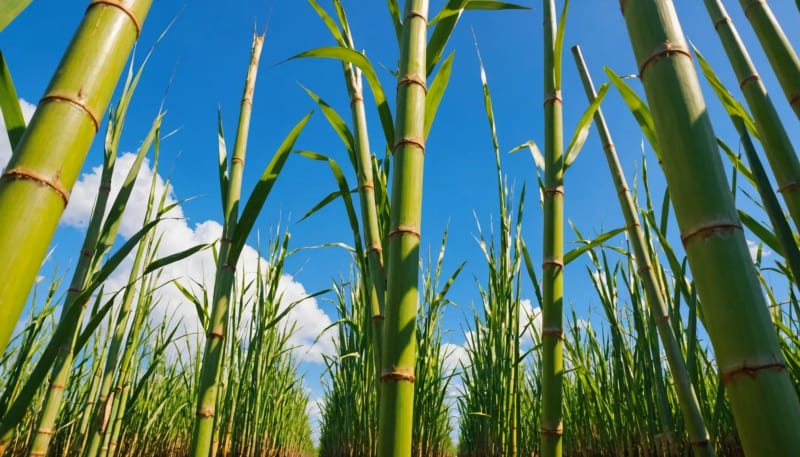
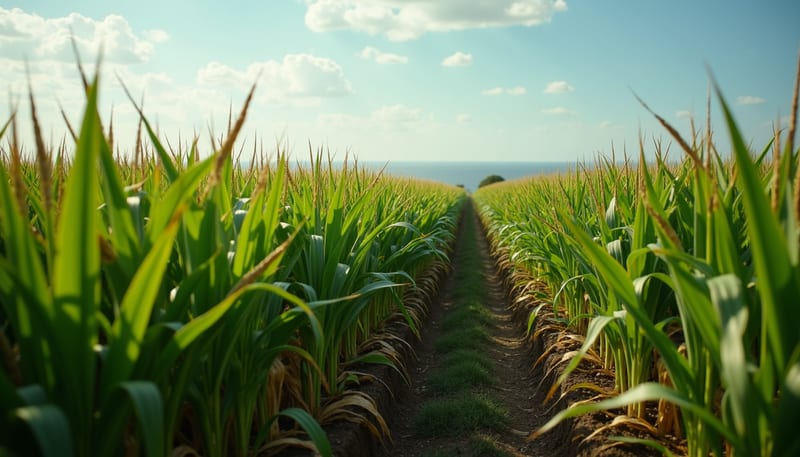
Mature sugarcane: the stalk holds the juice from which raw sugar is made
How beet sugar is made
- Harvest. Beet is lifted in autumn and stored in clamps beside the factory.
- Slicing and diffusion. Washed beets are cut into thin strips called cossettes and soaked in hot water, which draws out the sugar.
- Purification. The juice is cleaned with lime and carbon dioxide.
- Evaporation and crystallisation. The juice is concentrated and crystallised directly into white sugar, without a separate raw-sugar stage.
- By-products. The spent pulp is dried into animal feed; beet molasses goes to feed, yeast and fermentation.
Beet factories run a "campaign" of roughly three to five months after harvest, then stand idle or process stored thick juice. Cane mills in Brazil's Centre-South crush for about eight months, from April to November.
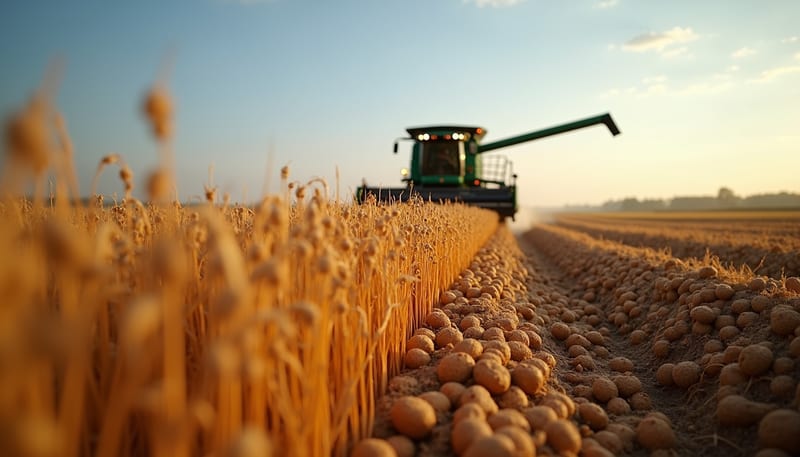
Root crops such as beet are lifted mechanically in autumn and processed in a short campaign
Taste and cooking: does it make a difference?
For refined white sugar, no difference is reliably detectable in drinks, sauces or most baking. Some pastry chefs report small differences in how the two caramelise, which is usually put down to trace compounds; these differences do not show up in industrial specifications.
Unrefined sugars are a different matter. Cane molasses tastes pleasant, which is why demerara, muscovado and other brown sugars are almost always cane products. Beet molasses is bitter and earthy, so there is no traditional "raw beet sugar" for the table. Brown sugar made from beet is refined white beet sugar coated with cane molasses.
Which is healthier, beet or cane sugar?
Neither. Both are sucrose, with about 4 kcal per gram and the same effect on blood sugar. Health authorities' advice on limiting free sugars applies equally to both. Claims that one is "more natural" generally refer to unrefined cane sugars, which contain small amounts of minerals from molasses, too little to matter nutritionally.
GMO and organic considerations
In the United States most sugar beet grown is a genetically modified, herbicide-tolerant variety, so US buyers who need non-GMO sugar often specify cane. In the EU, GM sugar beet is not grown commercially. Brazil has approved a genetically modified sugarcane variety, but conventional cane still makes up most of the crop, so buyers who need non-GMO status should ask for it in the specification and in the documents.
Organic sugar is available from both crops, but most internationally traded organic sugar is cane.
Cost and trade: why most traded sugar is cane
Cane has two big cost advantages. It is a perennial, so one planting gives several harvests, and its bagasse fuels the mill, so energy costs are low. Beet must be replanted every year and its factories buy fuel for the campaign.
As a result, most of the world's exportable surplus is cane sugar. USDA data for 2025/26 put Brazil alone at about 34.1 million tonnes of exports, more than half of world trade, while the European Union, the largest beet producer with about 15.5 million tonnes of output, exported only about 1.3 million. Beet sugar is mostly eaten where it is grown; cane sugar is what moves on ships. See the largest sugar exporters in the world for the full ranking.
Which should a bulk buyer choose?
- For general food manufacturing, refined beet and cane sugar are interchangeable. Choose on price, origin, delivery time and documents.
- For soft drinks, many bottlers specify cane sugar or cane-origin beverage-grade sugar and add tests such as acid beverage floc.
- For non-GMO programmes in North America, cane sugar is the simpler choice.
- For brown sugar, rum or speciality uses, cane is the only practical option.
- For refiners, raw cane sugar such as VHP is the standard feedstock; there is no traded raw beet equivalent.
Brazil exports cane sugar in every grade from ICUMSA 45 refined white to raw ICUMSA 600–1200. If you are switching from beet to cane, send us your current specification and we will match it to the nearest Brazilian grade.
Frequently asked questions
What is the difference between beet sugar and cane sugar? They come from different plants grown in different climates and are processed differently, but refined beet sugar and refined cane sugar are both pure sucrose and behave the same in nearly all uses.
Can you taste the difference between beet and cane sugar? Not in refined white sugar, under normal use. You can taste the difference in molasses and unrefined sugars, which is why brown sugars are made from cane.
Why do soft drink companies prefer cane sugar? Many use either. Where cane is preferred, it is usually for non-GMO labelling, for marketing reasons, or because the bottler's specification was written around cane refinery output.
Is cane sugar more expensive than beet sugar? On the world market, cane sugar is usually the cheaper source because of lower production costs. In protected markets such as the EU and the US, domestic beet sugar prices are set largely by local policy.
How do I know if sugar is beet or cane? The label may say so; if not, isotope testing (carbon-13 analysis) can tell cane from beet, because the two plants fix carbon differently.