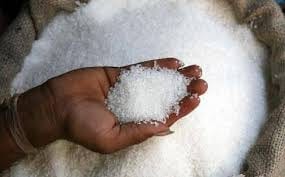
If you buy bulk sugar in South Africa you have two routes: the domestic milling industry, or import. This guide is about how to decide between them, and how to run the import route properly if that is the one that fits your specification, your volume and your timing. It is written for the buyer — a bakery, a beverage plant, a confectioner, a repacker or a distributor — not for the mills.
How bulk sugar reaches a South African buyer
South Africa has its own cane industry, concentrated in KwaZulu-Natal and Mpumalanga, served by a small number of large milling operations and a regulated domestic market. For a buyer that means the local route is short and familiar, and that the number of counterparties is small.
The import route exists alongside it, and it is used for three reasons that have nothing to do with loyalty:
- Specification. A process that needs a particular ICUMSA colour, granulation or packaging format may be served more exactly by a specific export grade than by whatever the domestic market is producing that month.
- Volume and continuity. A buyer whose requirement outruns the allocation available locally, or who needs cover through the domestic off-crop, imports to fill the gap.
- Landed cost. Whether an imported tonne is cheaper depends on the world price, freight to Durban, the tariff in force and the rand — and it changes. It is a calculation, not a rule.
Before you compare anything: define the specification
Most failed sugar purchases are specification failures dressed up as price disputes. Write down, before you talk to anyone:
- The ICUMSA colour ceiling you need. The ICUMSA colour scale and grade chart explains what each number means and what it is normally used for.
- The granulation your process needs, and whether it is dissolved or handled dry.
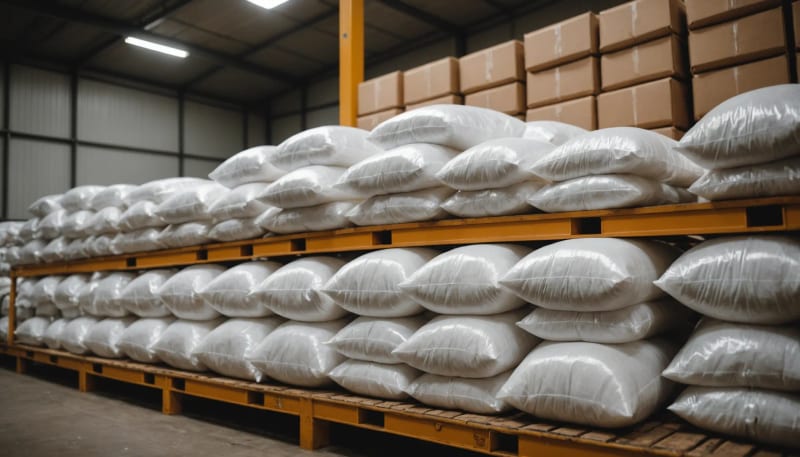
- The packaging: 50 kg bags, 1 MT jumbo bags or bulk, and how the cargo will be moved at your end.
- The tonnage, and whether this is one shipment or a contract across a year.
With those four, both routes can be priced against the same thing.
What changes when you import
Duty and landed cost
South Africa applies a tariff on sugar imports administered by the International Trade Administration Commission, under a formula tied to a reference price. The practical point for a buyer is that the rate in force when your cargo clears — not the rate you read about last year — is the one in your landed cost. Check it at the time you contract, and build it into the comparison rather than discovering it at clearance.
Incoterm
The route decision is also an Incoterm decision. FOB Santos or Paranaguá puts the ocean freight and the insurance on you; CFR Durban puts the freight on the seller; CIF adds minimum marine cover. Under all three, risk passes when the cargo is on board in Brazil — the carriage is bought on your behalf, it is not a delivery guarantee. The full breakdown of who pays for what is in our guide to buying sugar from Brazil.
Documents
An imported cargo arrives with paper, and the paper is what you hold it to: certificate of analysis for your lot, ICUMSA certificate for the colour grade, certificate of origin from an accredited Brazilian certifier, weight and quality certificates, third-party inspection by SGS, Intertek or an equivalent where you specify it, and a phytosanitary certificate where required.
Lead time
An import is planned around two calendars: the Brazilian Centre-South crush, which runs from roughly April to November, and your own production schedule. That is a planning advantage once you are used to it and a surprise if you are not.
Choosing a counterparty for the import route
The weak point in importing is not the sugar, it is the chain of intermediaries between you and the cargo. Ask any seller to evidence that it exists, that it exports, and that it has allocation:
- A company registration number you can check — in Brazil, the CNPJ.
- Evidence of shipment history, such as a redacted bill of lading.
- A specification agreed in writing before a price is quoted.
- A named port of loading, a named Incoterm, and a quotation with a stated validity period.
- Payment through the banking channel — documentary letter of credit or documentary collection — never outside it.
Our full checklist for qualifying and verifying a bulk sugar supplier sets out the checks and the red flags in detail. Apply it to us as readily as to anyone else.
Which Brazilian grades suit which South African buyer
- ICUMSA 45 refined white — beverage, confectionery, pharmaceutical and cosmetic use, where colour matters.
- ICUMSA 35 refined white — the most refined grade in the range.
- Refined white sugar crystals — granulated, for baking and dessert manufacture.
- ICUMSA 100 cane sugar — high-volume applications that do not need full refinement.
- Raw brown cane sugar, ICUMSA 600–1200 — refineries, distilleries and fermentation plants.
Storage and handling after clearance
Sugar is hygroscopic, and a Durban summer is not a kind warehouse climate for it. Keep the cargo dry and off the floor, keep it away from odour-bearing stock, rotate first-in-first-out, and keep the lot number tied to its certificate of analysis so that any later complaint has an evidence trail. More detail is in our guide to storing and handling wholesale sugar.
Getting a number you can compare
Price the import route properly and the comparison with domestic supply becomes straightforward. Ask for a quotation that states the grade, the Incoterm and named port, the packaging, the tonnage and its validity period; our explanation of how a sugar quotation is built describes each component, and our analysis of what moves sugar prices covers the crop cycle, freight and currency behind it.
Send the grade, the tonnage and the destination port — Durban, Cape Town or elsewhere — and we will quote against it. Minimum order quantity, lead time, payment terms and packaging are confirmed on quotation, because each moves with grade and destination. Contact Brazil Sugar Top Suppliers.
Recent Posts
The Ultimate Guide to Buy Sugar in Bulk: Smart Tips and Benefits
The Ultimate Guide to Wholesale Sugar Suppliers: How to Choose the Best Partner for Your Business
Unlocking the Potential of Sugar Wholesale: A Comprehensive Guide